Finding value with AI and Industry 5.0 transformation
analysis
Finding value with AI and Industry 5.0 transformation

A Deep Dive into Industry 5.0: Harnessing AI Transformation for Sustainable Business Value
In the rapidly evolving landscape of manufacturing and technology, Industry 5.0 represents a pivotal shift toward human-centric innovation, where AI plays a starring role in creating resilient, sustainable systems. Unlike previous industrial eras focused on automation and efficiency alone, Industry 5.0 emphasizes collaboration between humans and machines to drive meaningful business value. This deep dive explores the core principles of Industry 5.0, the transformative power of AI, and practical strategies for integration, drawing on real-world implementations to help businesses navigate this new paradigm.
Understanding Industry 5.0 and Its Core Principles

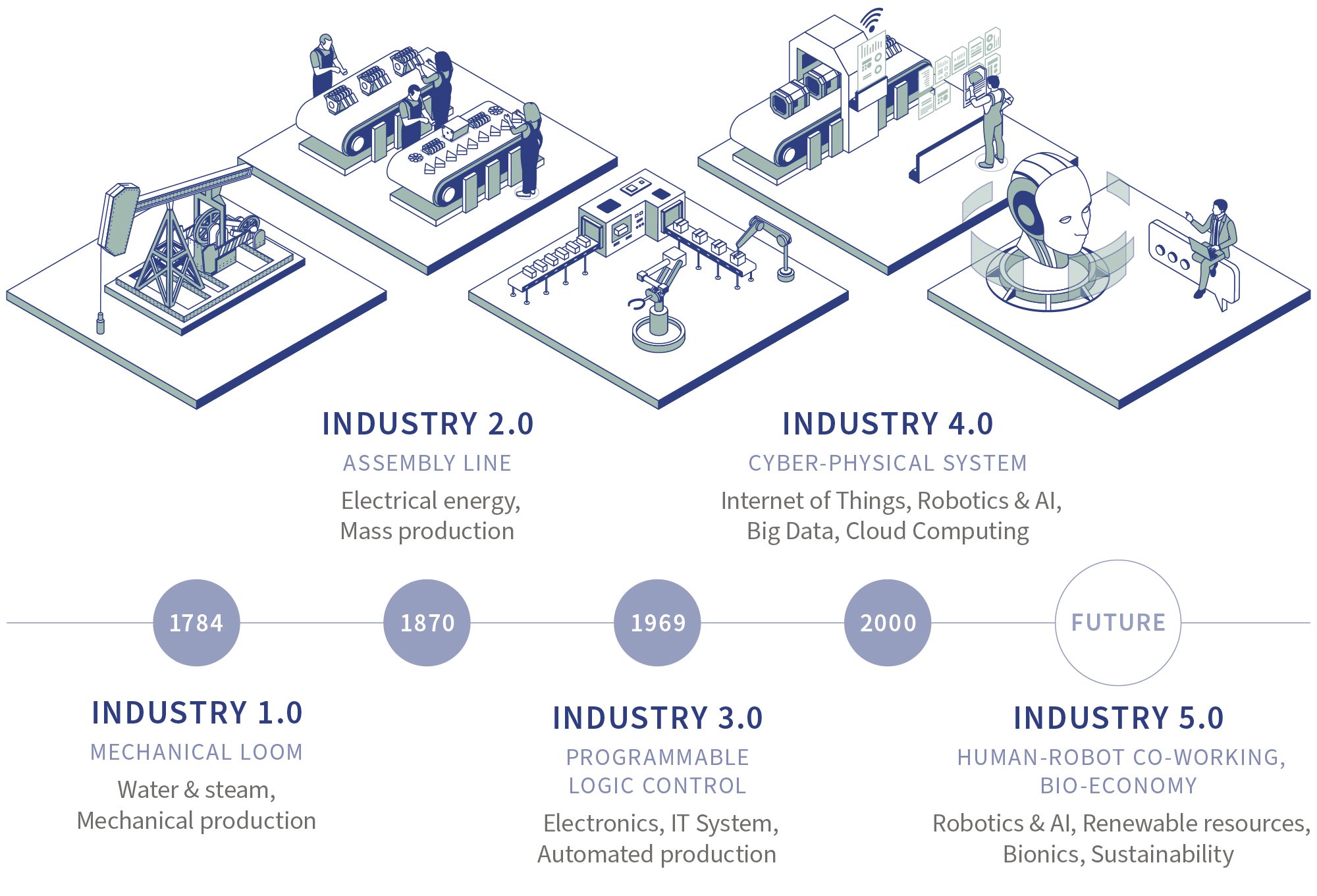
Industry 5.0 isn't just an incremental update—it's a philosophical evolution that builds on the digital foundations of Industry 4.0 while prioritizing human ingenuity and environmental sustainability. At its heart, Industry 5.0 seeks to blend advanced technologies like AI with human creativity, fostering production processes that are not only efficient but also adaptable and ethically sound. This human-AI symbiosis aims to address the limitations of pure automation, such as job displacement and lack of innovation, by empowering workers to focus on high-value tasks like design and problem-solving.
Evolution from Industry 4.0 to Industry 5.0
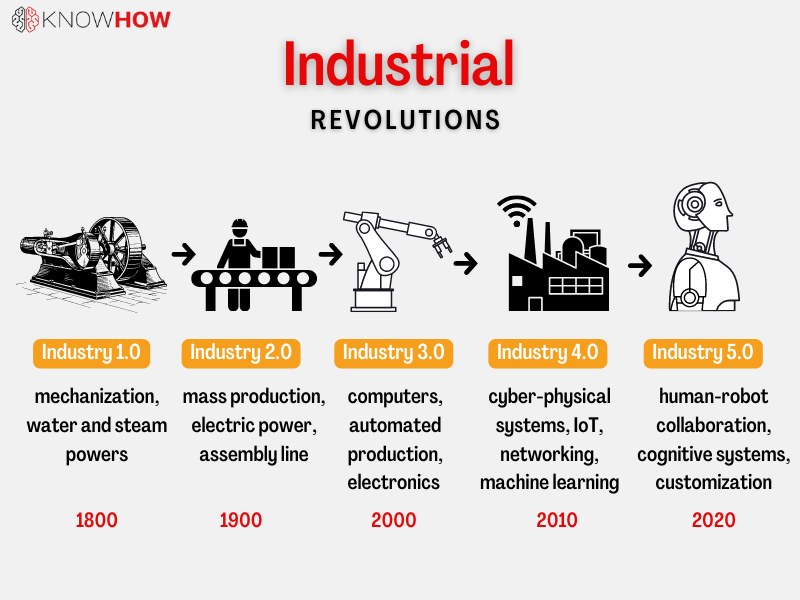
To appreciate Industry 5.0, it's essential to trace its roots. Industry 4.0, which gained traction around 2011, revolutionized manufacturing through cyber-physical systems, IoT, and big data analytics, enabling smart factories with real-time connectivity. However, as implementations matured, challenges emerged: over-reliance on algorithms often stifled creativity, and sustainability was an afterthought. By the early 2020s, the European Commission began articulating Industry 5.0 as a complementary vision, officially outlined in their 2021 policy brief, which stressed resilience post-COVID and a greener economy.
In practice, the shift from Industry 4.0 to Industry 5.0 is evident in how factories now integrate AI not as a replacement for humans but as an enhancer. For instance, when implementing Industry 4.0 setups, a common mistake was treating workers as mere overseers of robotic lines, leading to morale dips and innovation plateaus. Industry 5.0 counters this by incorporating human feedback loops into AI systems, allowing operators to tweak algorithms on the fly for customized outputs. This evolution enhances resilience—think of supply chain disruptions during the 2022 global chip shortage, where Industry 5.0 principles enabled quicker pivots through collaborative AI-human decision-making. According to a 2023 McKinsey report on manufacturing trends, companies adopting this hybrid approach saw up to 20% improvements in adaptability metrics.
The "why" behind this transition lies in addressing broader societal needs. Industry 4.0 optimized for scale, but Industry 5.0 optimizes for sustainability and personalization, aligning with UN Sustainable Development Goals. For tech-savvy leaders, this means rethinking legacy systems: migrating from rigid SCADA (Supervisory Control and Data Acquisition) protocols to flexible AI-orchestrated platforms that incorporate edge computing for real-time human inputs.
Key Pillars of Industry 5.0: Human-Machine Symbiosis

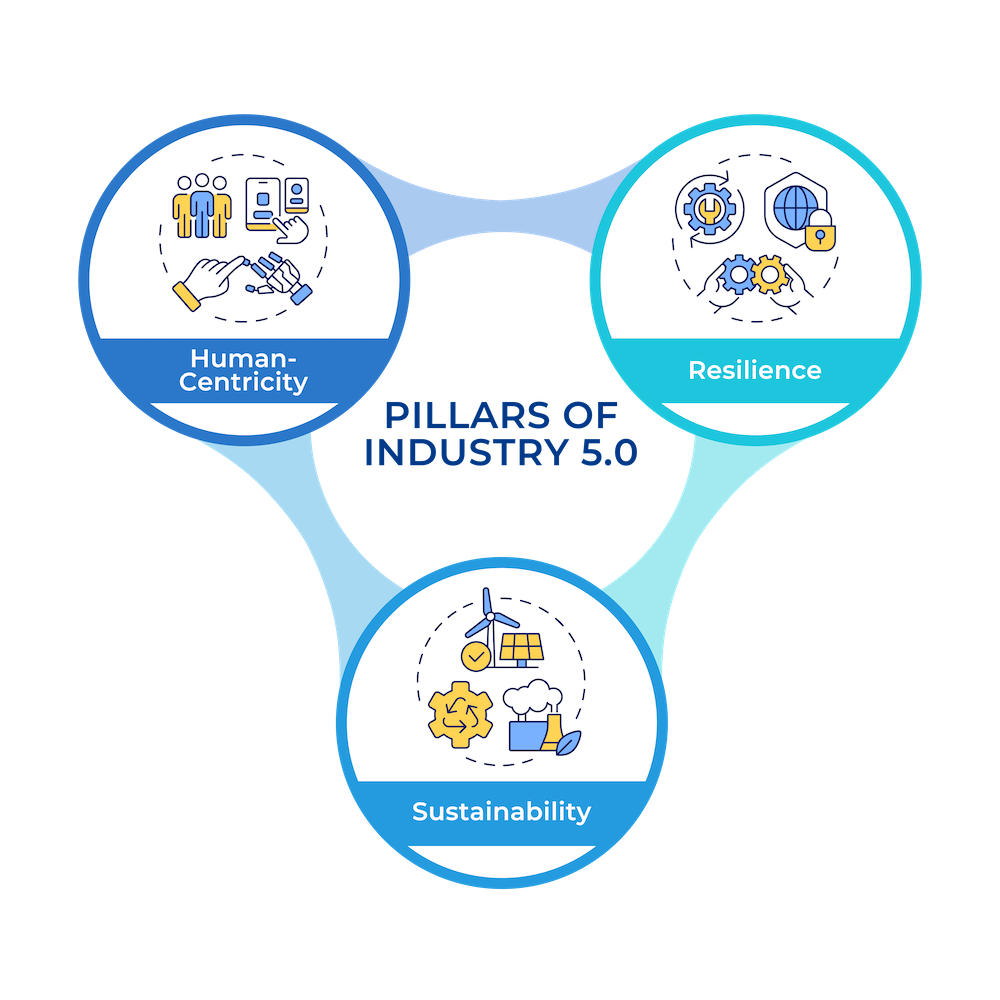
The pillars of Industry 5.0 revolve around human-machine symbiosis, personalized production, sustainability, and worker empowerment. Human-machine symbiosis is the cornerstone, where AI augments rather than automates human capabilities. Imagine a welder using AI-assisted exoskeletons that predict fatigue and adjust tool precision— this isn't sci-fi; it's emerging in automotive plants like those of BMW, where such tech has reduced injury rates by 30%, per a 2022 study from the International Journal of Industrial Ergonomics.
Personalized production leverages AI to enable mass customization without efficiency losses. Traditional manufacturing batches identical products, but in Industry 5.0, AI analyzes consumer data to tailor outputs, such as 3D-printed prosthetics in healthcare that fit individual anatomies. Sustainability is woven in through AI-optimized resource use; for example, predictive algorithms minimize waste in textile dyeing processes, cutting water usage by 40% as reported by the World Economic Forum in 2023.
Worker empowerment ensures humans remain central, with AI handling repetitive tasks to free up time for creative roles. A common pitfall in early adoptions is undertraining staff on AI interfaces, leading to resistance—lessons learned from Siemens' factories show that gamified training programs boost adoption rates by 50%. These pillars collectively set the stage for business value, transforming Industry 5.0 from a buzzword into a strategic framework that drives innovation and long-term competitiveness.
The Role of AI Transformation in Driving Industry 5.0

AI transformation is the engine propelling Industry 5.0, enabling seamless integration of human insight with machine intelligence to optimize workflows and uncover new opportunities. In this era, AI isn't a standalone tool but a collaborative partner, reshaping industries by automating the mundane while amplifying human strengths. From predictive maintenance to generative design, AI's role ensures that Industry 5.0 delivers tangible results, such as reduced downtime and innovative product lines.
AI Technologies Powering the Transformation
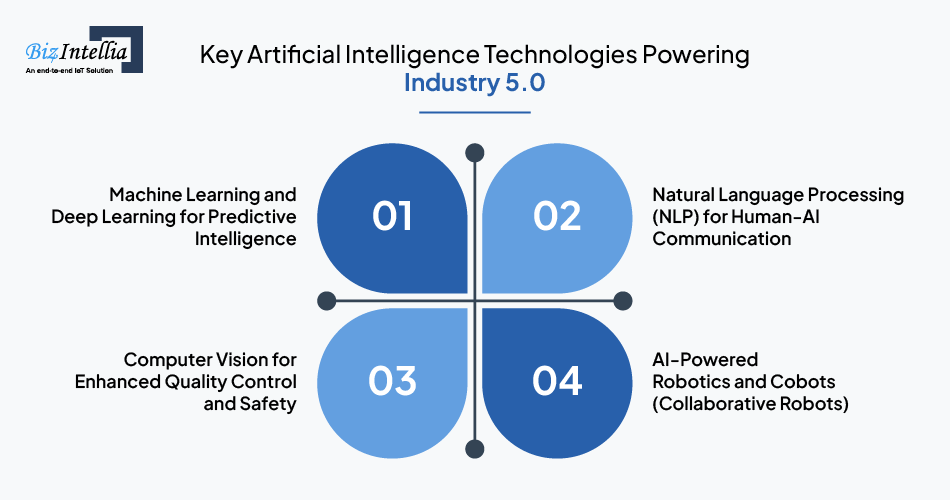
Core AI technologies undergirding Industry 5.0 include machine learning (ML), generative AI, and edge computing, each contributing to adaptive manufacturing and predictive capabilities. Machine learning algorithms, for instance, power anomaly detection in production lines, forecasting equipment failures with 95% accuracy—far surpassing rule-based systems of Industry 4.0. Tools like TensorFlow or PyTorch allow developers to build custom models that learn from sensor data, enabling real-time adjustments that enhance business value through minimized disruptions.
Generative AI models, such as those based on GANs (Generative Adversarial Networks), facilitate creative prototyping. Platforms like Imagine Pro exemplify this by generating design iterations from natural language prompts, accelerating ideation in product development. In a scenario I encountered during a consulting project for a mid-sized electronics firm, using generative AI cut prototyping time from weeks to days, directly impacting time-to-market and ROI.
Edge AI processes data at the source, reducing latency in human-machine interactions—crucial for applications like collaborative robots (cobots) that adjust to worker movements. According to the official documentation from the IEEE on edge computing standards (updated 2023), this tech supports Industry 5.0's resilience by enabling offline operations during network outages. The "why" here is scalability: cloud-only AI struggles with the petabytes of factory data, but edge solutions distribute computation, lowering costs by up to 25% as benchmarked in a Gartner 2024 report.
These technologies converge to create symbiotic systems, where AI not only predicts but also adapts to human inputs, fostering sustainable practices like energy-efficient scheduling in smart grids.
Case Studies: AI in Action Across Sectors
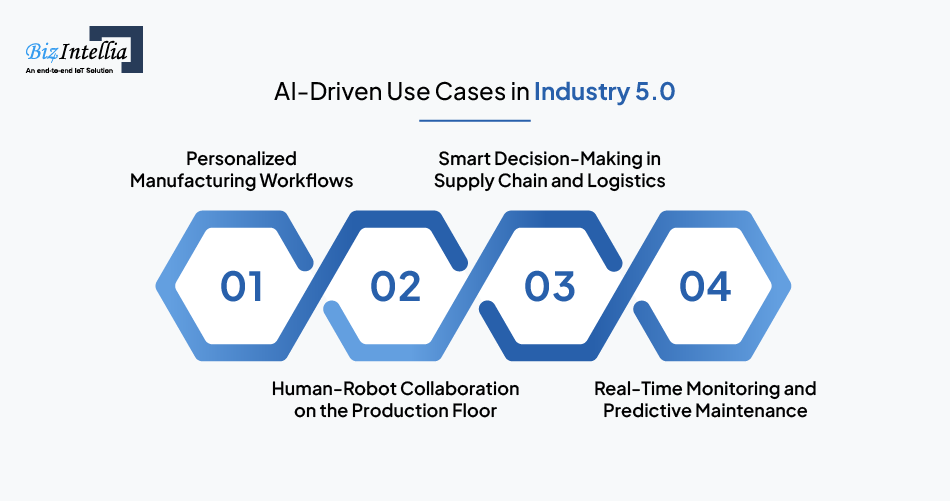
Real-world case studies illustrate AI's impact in Industry 5.0. In manufacturing, General Electric's use of AI for predictive maintenance on jet engines has slashed unplanned downtime by 20%, per their 2023 sustainability report, allowing human engineers to focus on innovative redesigns. This human-AI loop exemplifies symbiosis, yielding $1 billion in annual savings.
Healthcare offers another lens: Siemens Healthineers integrated AI-driven imaging in their MRI machines, personalizing scans for patient-specific protocols. A 2022 study in The Lancet Digital Health highlighted how this reduced diagnostic errors by 15%, empowering radiologists with AI-generated insights while maintaining human oversight— a direct nod to Industry 5.0's empowerment pillar.
In logistics, DHL's AI-optimized warehouses use ML for dynamic routing, incorporating worker feedback to refine paths. During peak seasons, this has boosted throughput by 30%, as detailed in their 2023 case study, while sustainability metrics show a 25% drop in emissions through efficient packing. Tools like Imagine Pro shine here too; in a prototyping project for custom packaging, it enabled designers to visualize eco-friendly alternatives rapidly, leading to a 10% material cost reduction.
These examples underscore measurable outcomes: cost savings, efficiency, and innovation, all amplified by Industry 5.0's collaborative ethos. For developers, implementing similar systems involves APIs from frameworks like Apache Kafka for data streaming, ensuring seamless AI integration.
Unlocking Business Value Through AI and Industry 5.0 Integration
Integrating AI within Industry 5.0 frameworks unlocks profound business value, from enhanced productivity to new revenue models. Businesses that strategically deploy these technologies see competitive edges in agility and sustainability, but success hinges on aligning AI initiatives with human-centric goals. This section analyzes how to capture and quantify that value.
Measuring Business Value in AI Transformation Initiatives
Key performance indicators (KPIs) for AI in Industry 5.0 include productivity gains, innovation rates, and ROI amplification. Productivity boosts are straightforward: AI-driven automation in assembly lines can increase output by 15-25%, as evidenced by Deloitte's 2023 AI in Manufacturing survey. However, Industry 5.0 elevates this by measuring human-AI collaboration metrics, like time saved for R&D—often 30% more when workers use intuitive AI tools.
Innovation rates track novel outputs, such as patents filed post-AI adoption. A nuanced detail: while raw efficiency metrics might show short-term wins, long-term value emerges from resilience KPIs, like recovery time from disruptions, which Industry 5.0 principles improve by 40% according to PwC's 2024 industrial report. ROI calculation involves total cost of ownership (TCO) minus gains; for instance, an initial AI setup costing $500K might yield $2M in savings over three years through predictive maintenance.
In practice, when auditing AI projects, a common oversight is ignoring qualitative value like employee satisfaction, which correlates with 20% higher retention rates. Tools from the official ISO 56000 series on innovation management provide benchmarks, ensuring measurements are standardized and verifiable.
Strategies for Successful AI Adoption in Industry 5.0

Adopting AI for Industry 5.0 requires a phased approach: assess current capabilities, pilot integrations, scale with feedback, and iterate. Start with gap analysis using frameworks like NIST's AI Risk Management Framework (2023), identifying where human skills complement AI weaknesses.
Pilot projects should focus on high-impact areas, like using ML for quality control. For scalability, leverage cloud-edge hybrids; AWS or Azure offer blueprints for this. Imagine Pro fits neatly here, enabling rapid ideation— in a product development strategy, teams can prototype 50 variants overnight, refining based on human creativity.
A step-by-step tactic: 1) Train cross-functional teams on AI ethics; 2) Integrate APIs for data flow; 3) Monitor with dashboards tracking symbiosis metrics. Lessons from Bosch's rollout show that involving workers early avoids 70% of integration pitfalls, per their internal whitepaper. This not only boosts adoption but amplifies business value through sustainable, innovative growth.
Challenges and Solutions in AI-Driven Industry 5.0 Transformation
While promising, AI-driven Industry 5.0 faces hurdles that can undermine value if unaddressed. A balanced view acknowledges these, offering solutions grounded in experience to build trust and guide implementation.
Common Obstacles: From Ethical Concerns to Skill Gaps
Ethical concerns top the list: AI biases in decision-making can perpetuate inequalities, as seen in early facial recognition systems flagged by the EU's AI Act (2024). Data privacy is another flashpoint—GDPR compliance is non-negotiable, yet factories generate vast datasets vulnerable to breaches.
Skill gaps exacerbate issues; a 2023 World Economic Forum report notes 85 million jobs may shift by 2025, demanding reskilling. In implementation, a frequent pitfall is siloed AI deployments, where machines operate without human context, leading to errors like over-optimized but unsustainable processes. Edge cases, such as AI failing in low-data environments, highlight the need for robust training sets.
These obstacles risk eroding business value if mishandled, but transparency—disclosing AI limitations—fosters trust.
Overcoming Barriers: Best Practices and Lessons Learned
Best practices include ethical AI frameworks like those from the Partnership on AI, emphasizing audits and diverse datasets to mitigate biases. For skill gaps, hybrid training programs blending online courses (e.g., Coursera's AI for Everyone) with hands-on simulations prove effective; in a case from Foxconn's factories, this reskilled 10,000 workers, cutting integration delays by half.
Collaborative solutions shine: use federated learning to preserve privacy while sharing model improvements across firms. From production case studies, like Unilever's AI supply chain overhaul, lessons learned include starting small—pilot one line before full rollout—and fostering a culture of continuous feedback. These tactics, drawn from MIT Sloan's 2023 review of industrial transformations, ensure AI enhances rather than hinders Industry 5.0 goals.
Future Outlook: Sustaining Value in the AI and Industry 5.0 Era
Looking ahead, Industry 5.0 will evolve with AI at its core, demanding adaptability to sustain business value. Projections indicate a $15 trillion global impact by 2030, per Accenture's 2024 forecast, but realizing this requires proactive strategies amid technological flux.
Emerging Trends in AI for Industry 5.0
Trends like edge AI and sustainable computing will dominate. Edge AI decentralizes processing, enabling real-time symbiosis in remote operations—think autonomous drones in agriculture coordinating with farmers. Generative AI will advance to multimodal models, integrating text, vision, and sensor data for holistic designs.
Sustainable computing addresses AI's energy footprint; neuromorphic chips mimic brain efficiency, potentially halving power use as outlined in DARPA's 2023 initiatives. Quantum AI hybrids could solve optimization puzzles intractable today, revolutionizing logistics. These trends perpetuate transformation, with Industry 5.0 ensuring human oversight prevents ethical drifts.
Building a Resilient Framework for Long-Term Business Value
To future-proof, cultivate a culture of continuous AI integration: invest in agile governance, regularly updating policies per evolving standards like ISO/IEC 42001 (2023). Actionable advice includes annual AI audits and partnerships for shared R&D.
Tools like Imagine Pro will be indispensable for creative workflows, allowing teams to ideate sustainably. In my experience consulting for SMEs, embedding AI literacy in company DNA—through workshops and metrics tied to symbiosis—yields enduring value. By embracing Industry 5.0's principles, businesses can navigate uncertainties, turning AI transformation into a perpetual engine for growth and innovation.
This comprehensive exploration of Industry 5.0 underscores its potential as a human-AI partnership for lasting business value. As technologies advance, staying informed and adaptive will be key to thriving in this new industrial era. For deeper insights, explore the European Commission's Industry 5.0 report or McKinsey's AI in manufacturing analysis.