What’s Making AI Impact Difficult to Measure for Marketers?
analysis
What’s Making AI Impact Difficult to Measure for Marketers?
Why AI Marketing Impact Measurement Is Harder Than It Looks: A Deep Dive Into Influencer ROI Tracking
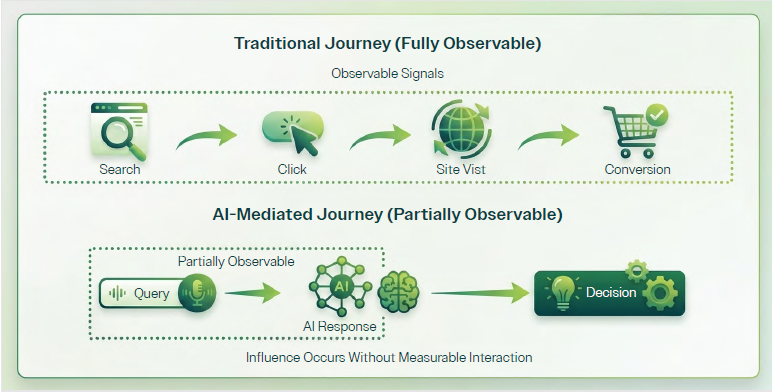
AI has made it dramatically easier to find the right creator for a campaign. It has not made it easier to prove that the campaign worked. That asymmetry is the core problem of AI marketing impact measurement: the same systems that improve targeting also obscure the causal chain between a sponsored post and a purchase. This deep dive walks through the technical reasons measurement breaks, the metrics that actually survive scrutiny, and the architecture required for credible influencer ROI tracking across TikTok, Instagram, and YouTube.
Why AI Marketing Impact Measurement Is Harder Than It Looks

The Attribution Gap Between AI-Powered Targeting and Business Results
Machine learning models optimize delivery: who sees an ad, which creator gets matched to a brand, which creative variation is served. That optimization happens inside a platform's ranking system, where the objective function is engagement likelihood, not incremental revenue. The result is a gap between what the model is rewarded for and what the brand actually cares about.
In practice, this means a campaign can score extremely well on every platform-side metric and still fail commercially. The platform reports success because its model achieved its objective — your objective was never in the loss function.
Data Silos Across TikTok, Instagram, and YouTube
Each walled garden exposes a different reporting surface. TikTok's developer documentation covers a Research API and Business APIs with distinct rate limits and field availability. Meta's Conversions API uses a completely different event schema and matching model. YouTube Analytics reports on channel and video performance with yet another set of dimensions and latency characteristics.
Three platforms, three schemas, three attribution windows, three definitions of "engagement." A unified dataset requires deliberate normalization, and the moment you build it, you own the semantics — including every ambiguity you failed to resolve.
Hidden Insight: Platforms Optimize for Engagement, Not Incremental Sales
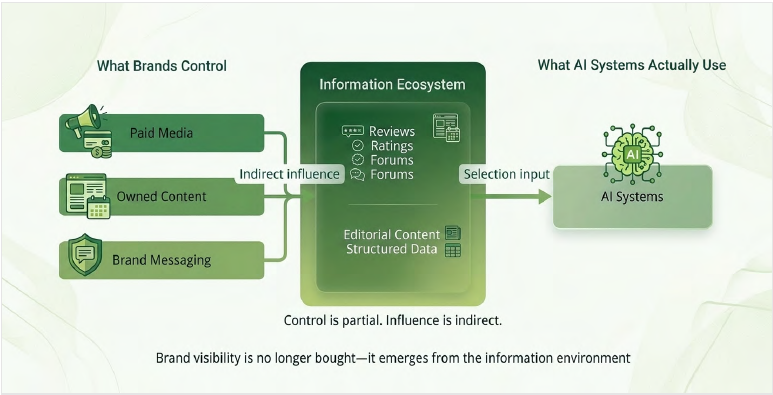
Time-on-app is a platform's revenue driver. A creator post that keeps users scrolling for 40 seconds is a success for the platform regardless of whether anyone bought anything. This is not malice; it's incentive alignment pointing in a different direction than yours. Any measurement framework that treats platform-reported performance as ground truth inherits that misalignment, which is precisely why independent AI marketing impact measurement is unavoidable rather than optional.
Core Metrics for AI Influencer Campaign Measurement
Moving Beyond Vanity Metrics to KOL Performance Measurement
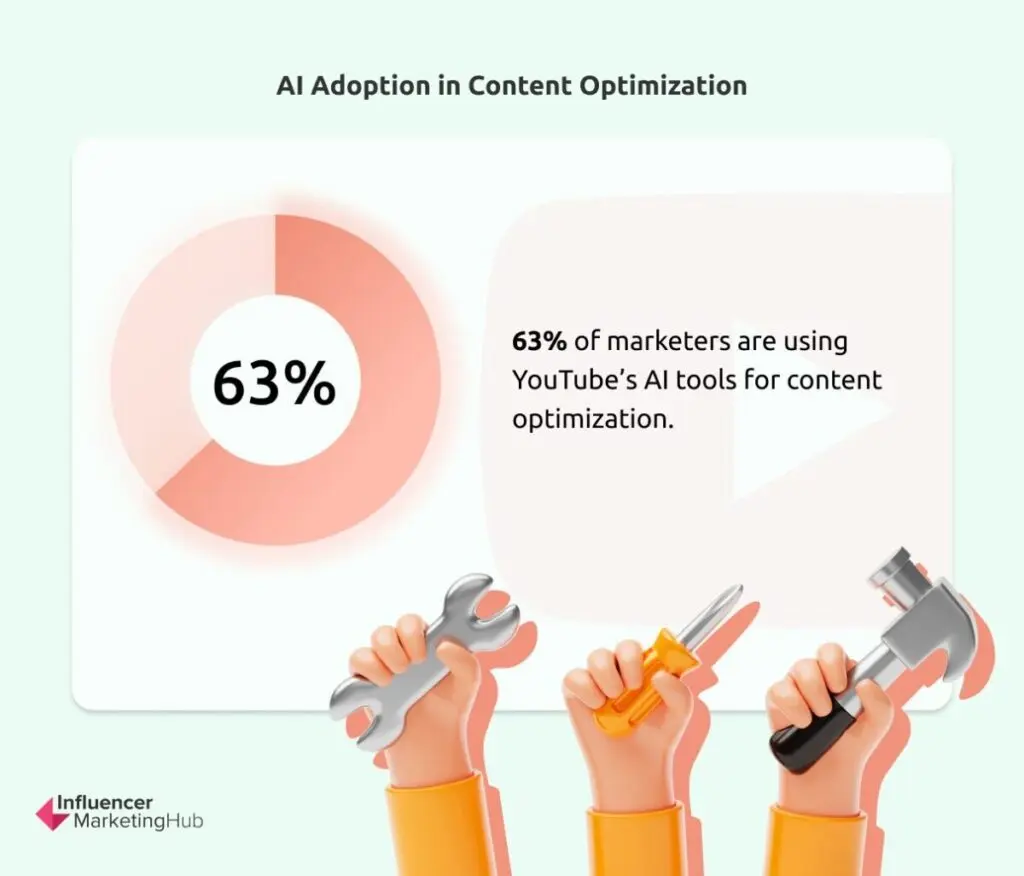
Likes and views are cheap to generate and easy to misread. Meaningful KOL performance measurement rests on five families of metrics: reach (unique accounts, not impressions), engagement quality (saves, shares, comment sentiment, completion rate), assisted conversions (touches on the path to purchase), incremental lift (conversions that would not have occurred otherwise), and retention (repeat purchase or subscription continuation).
The distinction matters because vanity metrics correlate with spend, not revenue. A creator with a 12% engagement rate can still produce negative lift if their audience was already going to buy.
Funnel Mapping: Awareness, Consideration, Conversion, Retention
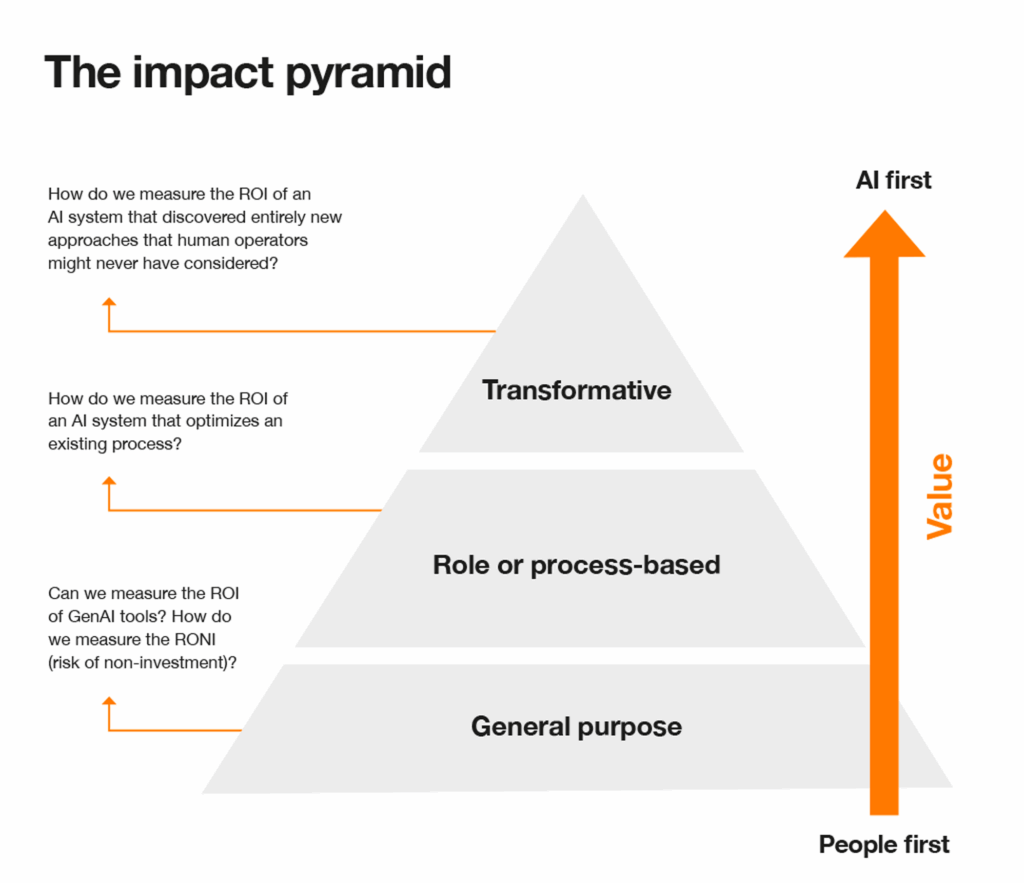
Map content to funnel stage before launch, not after. On TikTok, top-of-funnel native content typically drives awareness through reach and branded search lift. Instagram Reels sit closer to consideration, where saves and profile visits signal intent. YouTube Shorts and long-form drive conversion and retention because watch time supports longer explanations and direct calls to action.
The practical rule: assign each creator a primary funnel stage in your taxonomy at briefing time. Otherwise every post gets retrofitted into whichever stage makes the numbers look best.
Incrementality and Lift: The Metrics That Reveal True Impact
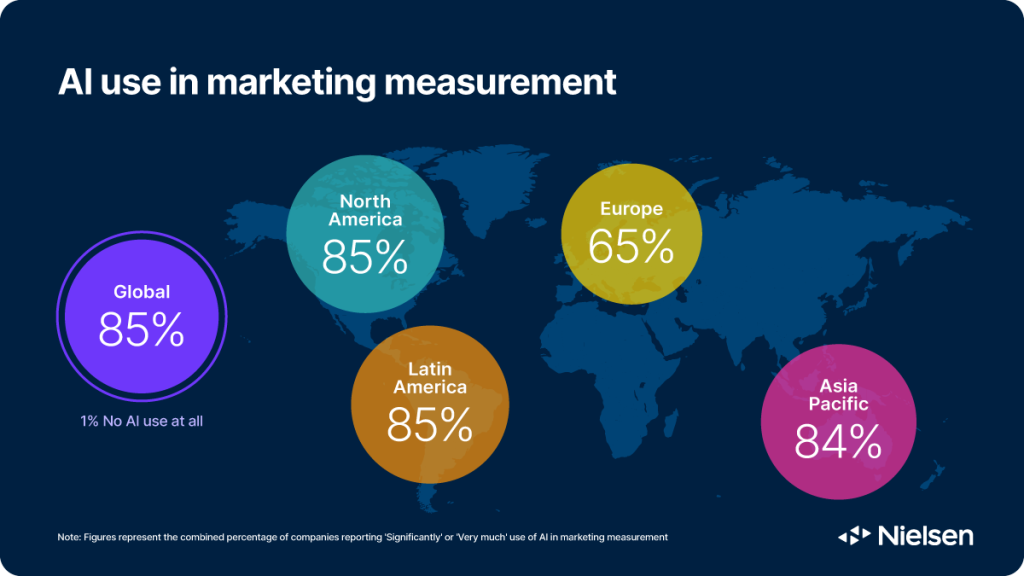
Incrementality asks a counterfactual question — what would have happened without the campaign? Last-click attribution cannot answer this. Holdout groups and geo-splits can. Establish a pre-campaign baseline (typically 2–4 weeks of matched-period data) and compare treated versus control conversion rates. Lift is the difference, expressed as either absolute percentage points or relative percentage change.
Using KOL Find to Build Cleaner Performance Baselines
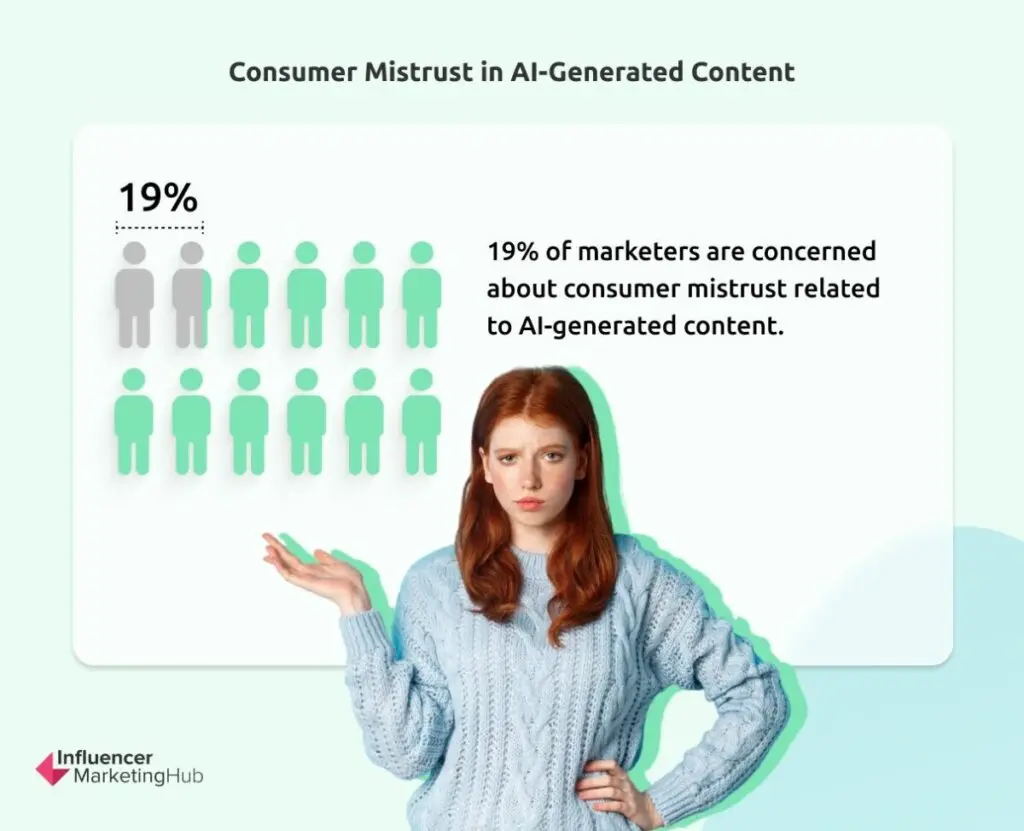
KOL Find is an AI-powered platform that matches brands with creators across TikTok, Instagram, and YouTube by analyzing millions of data points on audience composition, historical performance, and content fit. Better creator-audience alignment produces cleaner baselines: when the audience is genuinely new to the brand, pre-campaign conversion rates are more stable, and measured lift is less likely to be contaminated by pre-existing demand. That matters, because no measurement model — however sophisticated — can rescue a campaign that was matched to the wrong audience.
Technical Hurdles in KOL Performance Measurement
Identity Resolution in Walled Gardens
Without deterministic identifiers, stitching a single user across platforms becomes probabilistic. Match rates vary widely; false positives inflate lift; false negatives hide it. Data clean rooms let platforms and advertisers join on hashed identifiers without exposing raw PII, but they still require consent and typically only support aggregated outputs.
Model Drift and Non-Stationary Audience Behavior
Creator audiences are not stable distributions. Algorithms change, trends decay, and a creator's follower base shifts month to month. Any predictive model trained on Q1 data degrades by Q3. In production, monitor prediction error on rolling windows and retrain on a schedule tied to drift detection, not to calendar quarters.
Privacy, Consent, and Signal Loss
Apple's App Tracking Transparency, launched in April 2021, collapsed opt-in rates and forced reliance on SKAdNetwork-style aggregated attribution. Google subsequently reversed its plan to deprecate third-party cookies outright, announcing a user-choice model instead — but signal loss across the ecosystem is real regardless. You are now designing measurement for an environment where user-level joins are the exception.
Hidden Insight: Measurement Debt from Fragmented APIs
Most teams accumulate measurement debt: stitched spreadsheets, partially deprecated endpoints, inconsistent naming, timezone drift between exports. The debt compounds silently as campaign volume grows, until a reconciliation failure reveals that two dashboards have disagreed for six months.
How AI Marketing Impact Measurement Breaks Down in Real Campaigns
Case Scenario: Multi-Creator TikTok Push
A brand runs 18 creators over three weeks. Platform dashboards report 9.4M views and 640K engagements. Post-campaign analysis shows flat direct sales. Two causes: a large share of creator audiences already followed the brand (saturation, not acquisition), and purchases occurred on desktop hours after mobile discovery, outside the TikTok-attributed path.
Case Scenario: Instagram Reels and YouTube Shorts
The same creative ran on both. Instagram reported a 7-day click window; YouTube reported view-through conversions over a longer horizon. The platform with the longer window appeared twice as effective. Neither number was wrong — the comparison was.
Lessons from Production: What Marketers Miss
Three lessons hold across campaigns. First, set the baseline before spend begins. Second, always reserve a holdout, even a small one. Third, score creators on a consistent rubric so results are comparable across waves. Experience-based judgment still outperforms dashboard reading, but only when the underlying data is trustworthy.
Hidden Insight: AI Improves Matching but Complicates Attribution
Ironically, better matching makes attribution harder. When KOL Find aligns creators precisely to a target audience, more of the lift concentrates in a narrow, well-fit segment — and it becomes harder to isolate whether the improvement came from creator selection, creative, timing, or the platform's own optimization.
Influencer ROI Tracking: Models, Trade-Offs, and When to Use Them
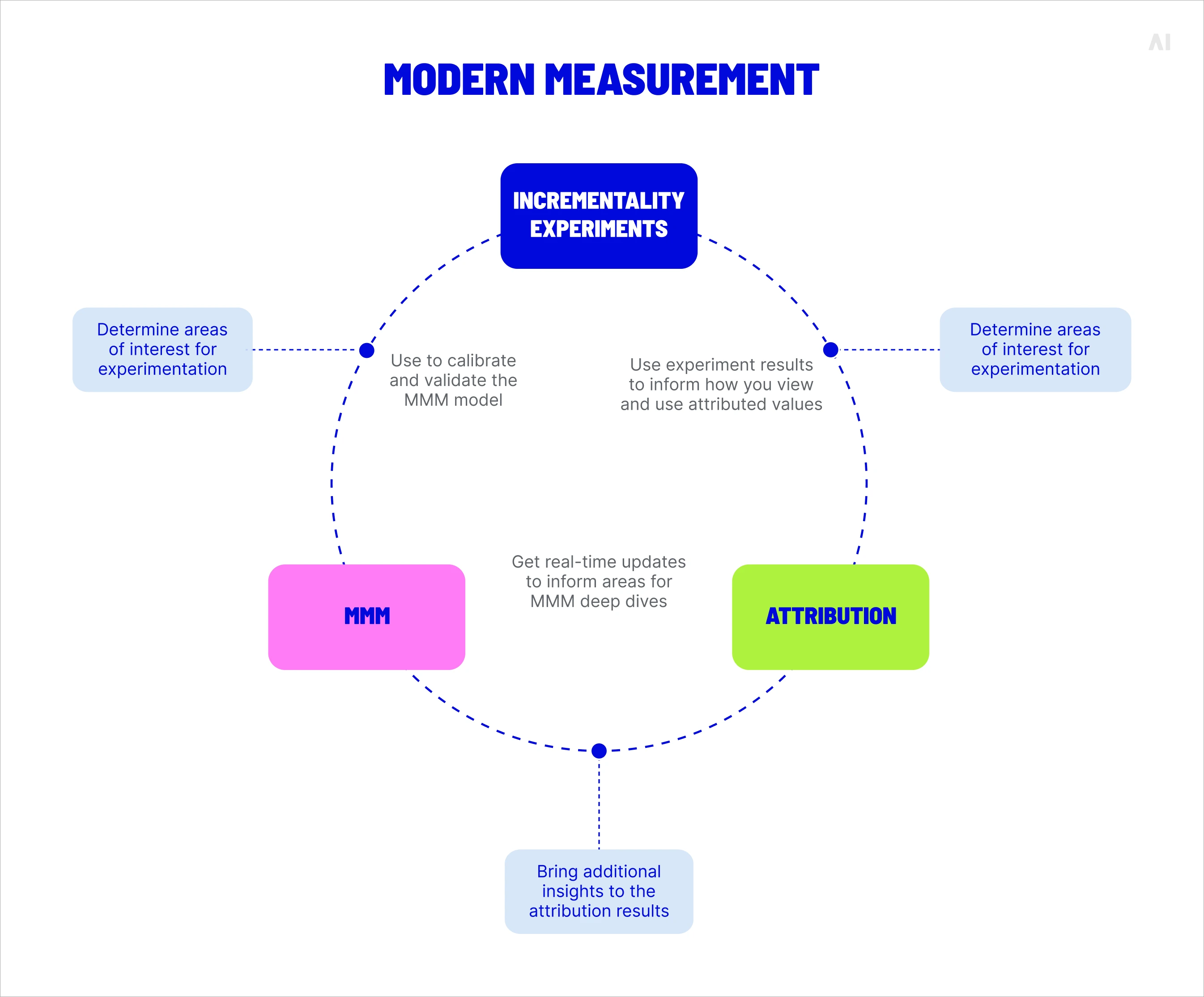
Media Mix Modeling vs. Multi-Touch Attribution
| Dimension | Media Mix Modeling (MMM) | Multi-Touch Attribution (MTA) |
|---|---|---|
| Direction | Top-down, aggregate | Bottom-up, user-level |
| Data need | Spend + outcomes over time | Event-level identity joins |
| Privacy resilience | High | Low to moderate |
| Speed | Slow (weeks) | Near real-time |
| Best for | Budget allocation across channels | Tactical in-channel optimization |
Meta's Robyn is a widely used open-source MMM implementation if you want a starting point.
Incrementality Testing and Geo-Experiments
Holdouts, geo-splits, and synthetic controls measure causal impact directly. Geo-tests are fast but noisy at small budgets; synthetic controls scale but depend on donor-market quality. Match the method to the decision you're making, not to the method you find most interesting.
Probabilistic vs. Deterministic Matching
| Approach | Match Rate | False Positive Risk | Privacy Compatibility |
|---|---|---|---|
| Deterministic (hashed email/phone) | Moderate | Low | Requires consent |
| Probabilistic (device, IP, timing) | Higher | High | Better, but increasingly restricted |
When to Use (and When Not to Use) Each Method
- MTA: use for tactical budget shifts inside one platform with strong signal.
- MMM: use for cross-channel allocation where privacy limits user-level joins.
- Geo-experiments: use when a holdout would be politically or commercially impossible.
- Synthetic controls: use when holdouts are infeasible but donor markets exist.
No single model survives every campaign mix. Treat them as a portfolio.
What the Experts and Official Guidance Say About AI Measurement
Industry Best Practices for AI Marketing Impact Measurement
IAB measurement guidelines and platform documentation converge on a few uncontroversial positions: use holdouts where possible, define metrics before launch, maintain consistent naming conventions, and document attribution assumptions. Google Ads' data-driven attribution documentation is explicit that models allocate credit rather than prove causality — a distinction many dashboards quietly blur.
Platform Documentation and API Limitations
Platform-native reports cannot be your sole source of truth. They are built to describe platform performance, not business outcomes, and rate limits, field deprecations, and aggregation thresholds constrain what you can even extract. Read the docs for TikTok, Meta, and YouTube before designing your schema.
Governance, Ethics, and Data Responsibility
Consent, data minimization, and purpose limitation are not compliance overhead — they are measurement design constraints. Once you accept them, you stop designing pipelines that depend on data you should not have.
Building a Measurement Stack That Connects AI to Revenue
Data Collection, Normalization, and Enrichment
The pipeline has four stages: platform exports, CRM and conversion APIs, third-party enrichment, and warehouse normalization. Enforce UTC timestamps, one naming convention per entity, and a single conversion definition. A minimal join skeleton:
SELECT
  c.campaign_id,
  c.creator_id,
  c.platform,
  COUNT(DISTINCT t.user_key) AS attributed_users,
  SUM(t.revenue)             AS revenue,
  SUM(t.revenue) / NULLIF(c.spend, 0) AS roas
FROM campaigns c
LEFT JOIN touchpoints t
  ON t.campaign_id = c.campaign_id
 AND t.event_ts BETWEEN c.start_ts AND c.end_ts + INTERVAL '14 days'
GROUP BY 1, 2, 3;
Using KOL Find to Improve KOL Selection and Measurement Baselines
KOL Find reduces creator-audience mismatch before a single dollar is spent. That upfront precision raises the signal-to-noise ratio of every downstream measurement: cleaner audiences mean more stable baselines, clearer lift signals, and fewer confounds when you analyze AI influencer campaign measurement results.
Dashboards for Executives vs. Operators
Executives need blended ROAS, incrementality confidence intervals, and budget pacing. Operators need creator-level retention curves, hook performance, and creative decay by format. Both must read from the same normalized warehouse, or trust collapses the first time the numbers disagree.
From Insights to Iteration
Measurement only pays off when it changes the next campaign: creative rotation schedules, budget reallocation, and updated creator scoring weights. If a report never changes a decision, it is documentation, not measurement.
Common Pitfalls That Distort AI Impact Measurement
Platform dashboards overstate performance because they count engagements, not outcomes. Correlation is routinely mistaken for causation — strong engagement during a campaign proves only that people saw it. Off-platform conversions (desktop purchases, in-store visits, phone sign-ups) are missed entirely by many stacks, inflating or deflating results depending on direction.
Short attribution windows miss delayed impact; a 7-day window systematically underweights content that drives research-heavy purchases. The subtler trap: teams often detect AI impact only when something breaks. Proactive positive-signal measurement — tracking lift before it turns negative — is what separates mature programs from reactive ones.
Advanced Techniques for AI Influencer Campaign Measurement
Synthetic control groups construct a counterfactual from weighted donor markets when a holdout is impractical. AI-assisted creative analytics tags hooks, pacing, emotion, and format at scale, then correlates them with conversion and retention. Predictive creator modeling forecasts outcomes from historical data — and KOL Find's matching data can inform those models before spend begins.
Cross-platform incrementality requires unified measurement IDs or clean rooms, since a single user may see a creator on three platforms within a week. Finally, decay-adjusted measurement matters because influencer posts continue accumulating views after the campaign window closes, and algorithmic re-ranking can resurrect or bury content months later.
The Future of Influencer ROI Tracking in an AI-First Landscape
Google's Privacy Sandbox and similar initiatives point toward aggregated, privacy-preserving measurement as the default. Generative AI accelerates creative fatigue, making diminishing-returns measurement per creator and format essential. And the industry is slowly converging on shared benchmarks for KOL performance measurement, which would finally make cross-brand comparisons meaningful rather than anecdotal.
When AI Impact Is Impossible to Measure Perfectly—and What to Do Instead
Perfect attribution is not coming. Adopt decision rules instead: cap budget on unproven creators, set minimum confidence thresholds before scaling, and commit to test-and-learn cycles. Track leading indicators — branded search volume, direct traffic spikes, save rates, follower quality — as early proxies for lagging revenue. When KOL Find narrows the creator set to genuinely well-matched audiences, those proxies become far more reliable.
Conclusion
AI marketing impact measurement is hard because incentives, privacy constraints, and platform architectures all pull against clean causal inference. The path forward is not a single perfect model but a portfolio: normalized data, deliberate baselines, holdouts where feasible, and honest documentation of what you cannot see. Do that, and influencer ROI tracking stops being a dashboard exercise and becomes an actual input to how you spend.