When Instagram Tags Products for Creators, Who Owns the Trust? - Complete Analysis
analysis
When Instagram Tags Products for Creators, Who Owns the Trust? - Complete Analysis

How Instagram Creator Product Tagging Shapes Audience Trust
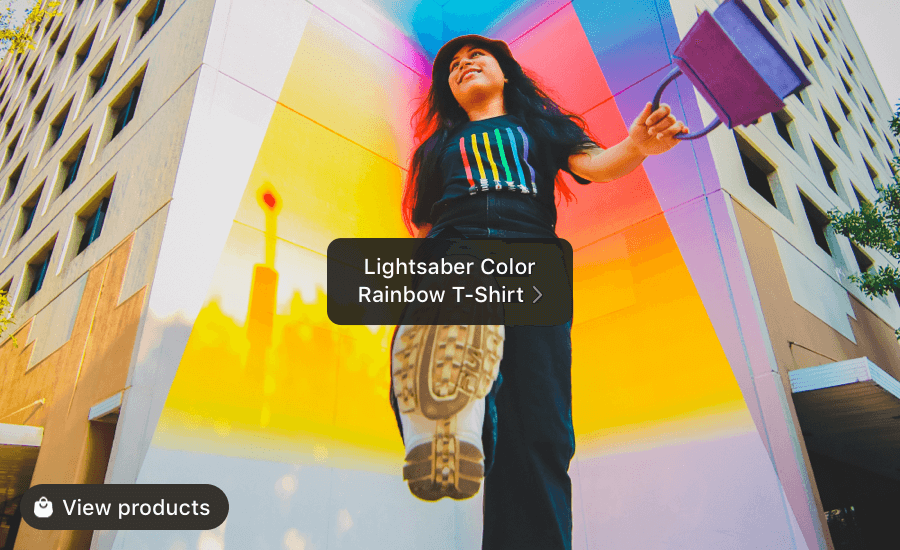
As Instagram evolves from a straightforward social feed into a full-funnel commerce engine, Instagram Creator Product Tagging has become one of the most important tools for turning an audience into a customer base. But every product tag carries something more valuable than a clickable link: it carries a slice of the creator’s reputation. This article explores how native tagging works, who really owns the trust it generates, where transparency often breaks down, and what creators and brands can do to preserve credibility in a commerce-driven ecosystem.
What Is Instagram Creator Product Tagging? Definition and Mechanics
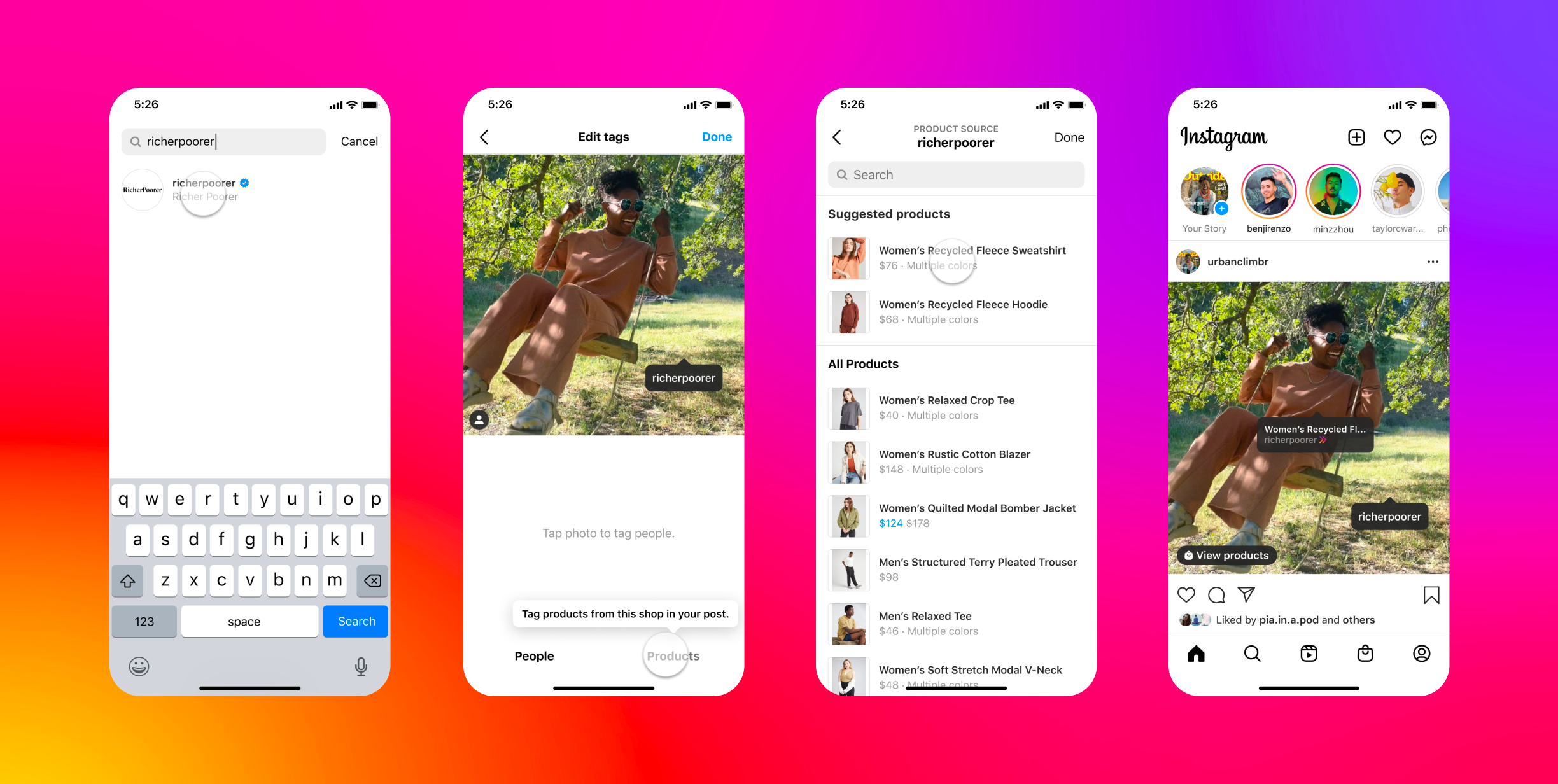
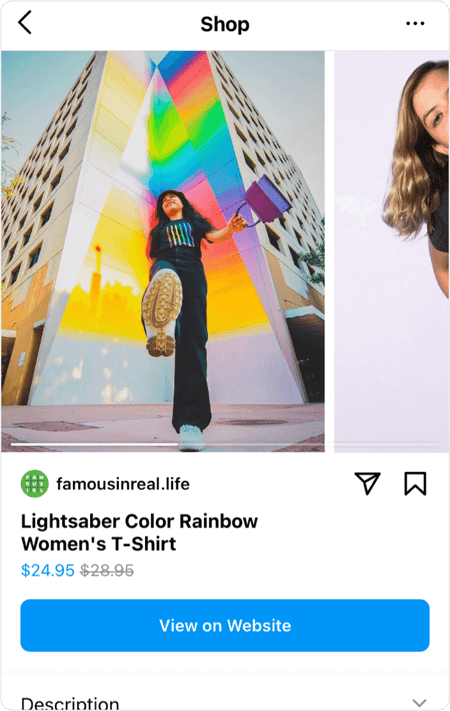
Instagram Creator Product Tagging lets creators attach shoppable product labels to brand catalog items in Feed posts, Reels, and Stories. When a viewer taps the tag, a product page opens with images, pricing, and an option to buy on or off Instagram. This is different from a Paid Partnership label, which signals a compensated brand relationship. It’s also different from an affiliate link, which usually sits in a creator’s bio or Stories and routes traffic through a tracking URL. A native tag is embedded in the content itself and typically requires brand approval.
That distinction may seem technical, but it changes the psychology of the interaction. A product tag doesn’t feel like an ad. It feels like an integrated part of the creator’s world.
Why a Product Tag Is More Than a Hyperlink
A tag says, “I want you to see this product.” It’s an implicit recommendation. In practice, audiences don’t automatically separate “this was sponsored” from “this is something they genuinely love” unless they’re told. The trust transfer happens instantly: the creator’s perceived expertise and relational capital are temporarily loaned to the tagged product.
That’s why saved and shared posts with tags outperform generic bio-link traffic in conversion. A link is a destination. A product tag is an endorsement.
The Shift from Link-in-Bio to Native Tagging
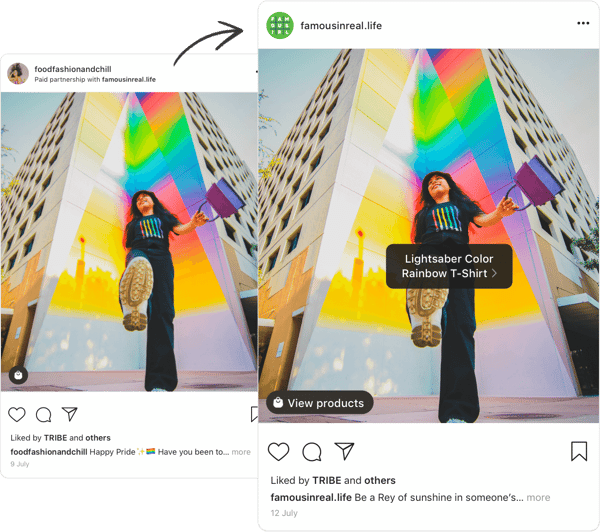
For years, creators pushed followers to “link in bio.” That created friction and often blurred intent. One bio link could represent anything. Native tagging removed the extra step and placed the product directly inside the content. But the shift also raised a transparency issue: when a tag appears inside a creator’s favorite routine, the line between organic preference and paid promotion becomes much harder for audiences to see.
If the creator doesn’t disclose, viewers may assume the recommendation is pure editorial. That assumption is exactly where trust lives — and exactly where it can be broken.
Who Owns the Trust Behind a Creator’s Product Tag?
.png)
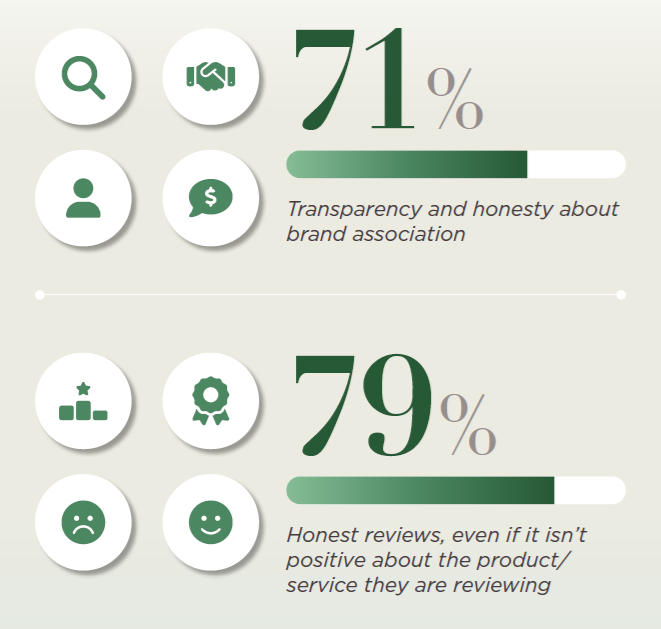
Trust isn’t held by a single party. It’s spread across the creator, the brand, the platform, and the audience’s perception. But ownership isn’t equal. Let’s break down the responsibilities.
Creator Accountability: The Trust They Have Built

Creators own the relationship with their audience. Followers follow because they value taste, consistency, and honesty. Every product tag is a strategic decision to put that reputation on the line. In my experience, creators lose trust not because of one bad product, but because they tag products outside their niche or tag so often that their recommendation engine turns into a billboard.
A creator should be able to justify why a specific product suits their specific audience. If they can’t, the tag becomes noise.
Brand Responsibility: The Product Behind the Tag
Brands are accountable for the product itself. If a creator tags a product that underdelivers, the audience doesn’t blame the manufacturer alone; they blame the creator who “sold” them. Brands owe creators accurate product information, reliable fulfillment, and honest marketing claims.
In practice, many trust breakdowns come from mismatched expectations. A brand claims a product is clean beauty, but the audience discovers ingredient lists that contradict the positioning. The brand’s catalog and claims become part of the social endorsement, so they need to be defensible.
Instagram’s Role as Platform and Trust Infrastructure
Instagram sets the rules of the game. Its branded content tools and Paid Partnership labels are designed to make compensation visible. The platform can also restrict access to product tagging for creators who violate policies or generate spam reports.
But Instagram is not a police force. It can’t verify whether a creator truly loves a product. Its infrastructure enables trust; it doesn’t guarantee it. Enforcement is limited, and much of the responsibility falls back on the humans involved.
A Framework for Assigning Trust Ownership
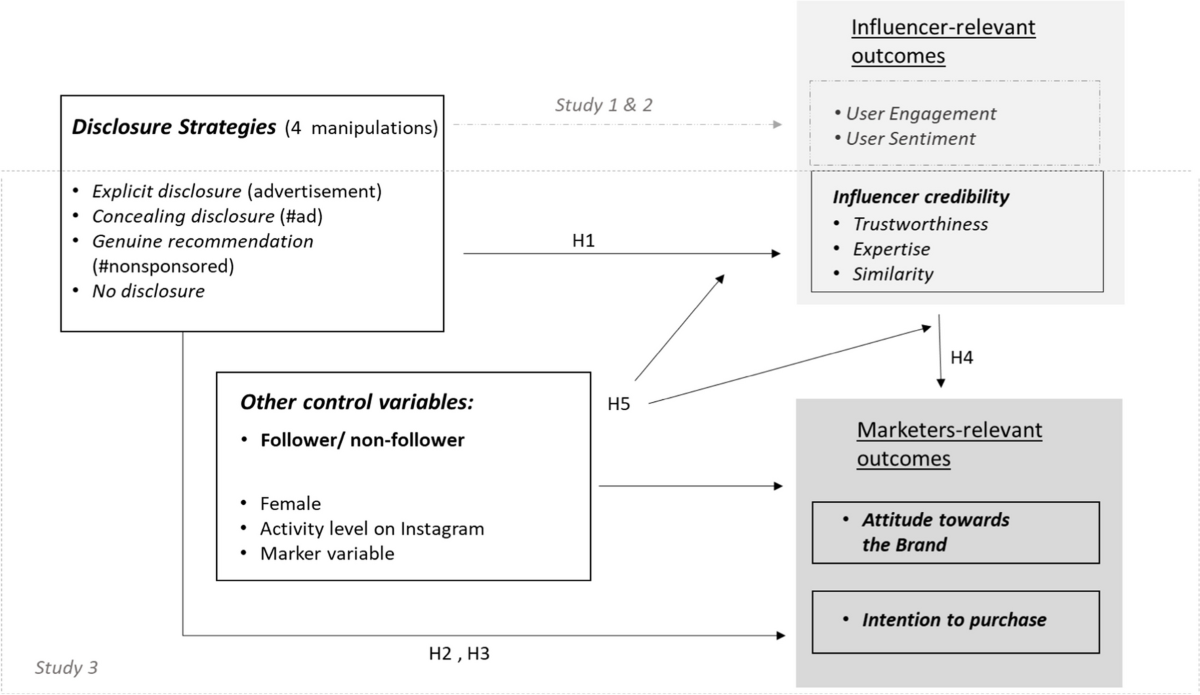
Here is a simple matrix for thinking about trust ownership in Instagram Creator Product Tagging scenarios:
| Stakeholder | Owns | Primary Trust Risk |
|---|---|---|
| Creator | Relational trust, authenticity | Audience feels deceived or sold to |
| Brand | Product quality, fulfillment, claims | Product fails to meet expectations |
| Audience | Perception, loyalty, interpretation | Confusion about undisclosed motives |
| Platform | Disclosure tools, enforcement, reach | Letting ambiguous sponsorship pass |
The core insight is this: trust is shared, but the creator bears the highest social risk. A brand can replace a creator after a failed campaign. A creator who loses audience trust may never get it back.
Why Influencer Trust Is the New Currency in Creator Commerce
How Instagram Creator Product Tagging Accelerates the Trust Transfer
With a single tag, a creator moves a follower from curiosity to consideration — and sometimes to purchase. This happens faster than a display ad because the medium is the message. The tag sits inside content the audience already trusts. Creators are, in effect, lending their credibility to a product.
That speed makes influencer trust the most valuable asset in creator commerce. It’s also why the stakes are so high.
What Erodes Influencer Trust in a Tagged Post
Several trust breakers appear regularly. Undisclosed sponsorships are the most obvious. Inconsistent product fit is more subtle: a fitness creator tagging a fast-food delivery service raises eyebrows. Over-tagging signals opportunism. When a post contains four or five product tags, audiences may assume the entire post is a shoppable ad rather than a genuine routine.
Misleading recommendations also destroy trust quickly. Tagging a product the creator clearly hasn’t tested — such as a supplement with unrecognizable ingredients — can explode in the comment section.
The Social Endorsement Contract
Tagging creates an unspoken contract: I’ve used this, I believe in it, and I don’t want to waste your money. That contract isn’t written in any terms of service. Followers nonetheless enforce it.
When the contract is broken, the creator loses trust far more than the brand does. The brand can rebrand and move on. The creator has to rebuild the relationship from the ground up. The social endorsement contract may be invisible, but it has real consequences.
The Creator Commerce Transparency Challenge
Native Tags vs. Affiliate Links: What Audiences Actually See
Native tags and affiliate links exist in different contexts. A native tag appears inside a post and feels seamlessly integrated. An affiliate link is often a swipe-up in Stories or a trimmed URL in a bio. To the audience, native tags feel more organic — which is exactly why they can become more deceptive if not disclosed.
Affiliate links are easier to recognize as monetization because they often take the user outside Instagram. Native tags require creators to explain why the product is there, otherwise the recommendation can feel hidden.
The Gray Area of Free Products, Gifts, and Paid Partnerships
Not every tagged product is paid. Some products are gifted. Some tags are affiliate-based. Some are fully sponsored. Audiences interpret each situation differently.
Gifted products carry implicit obligation. Affiliate tags may be used because the creator genuinely likes the product and earns a commission. Paid sponsorships are formalized. Without explicit language, viewers can’t tell the difference.
In practice, a gifted product with a caption like “I was sent this, but here’s my honest take” is often perceived as more genuine than a bare Paid Partnership label. But gifted items still count as material relationships. The FTC consistently requires disclosure for both gifts and payments, and Instagram’s branded content tools don’t always cover gifted items the same way they cover paid campaigns.
How Transparent Tagging Can Protect Authenticity
Creators can disclose without killing the engagement. Instead of a cold #ad, write something like:
I was gifted this serum from [Brand], but I’ve used it for three weeks
and here’s what I actually think.
For affiliate content:
This post includes affiliate links. I only recommend products I use
myself. There’s no extra cost to you if you shop through the link.
The disclosure should appear in the caption, not buried in hashtags. Use the Paid Partnership label when payment is involved. Add “gifted” language for products received for free. In my experience, transparent posts often get more comments because audiences appreciate respect for their intelligence. Trust rises when creators name the nature of the relationship.
How Instagram Product Tagging Works Under the Hood
Tagging Eligibility, Permissions, and Product Catalogs
Technically, product tags require a product catalog connected to Instagram’s commerce infrastructure, often via an ecommerce platform like Shopify. Brands can allow tags from all creators or approve individual creators individually. Creators need a connected Instagram Business account and must follow commerce policies.
The tag itself pulls data from the brand’s catalog, including availability and price. This is an important trust detail: if the catalog is outdated or inaccurate, audiences experience a broken post. The product they tap disappears or shows the wrong price, which immediately undermines trust in both the brand and the creator.
Algorithmic Treatment of Tagged Creator Posts
Instagram’s algorithm is designed to keep users on the platform and engaged. Highly promotional posts generally receive less organic reach. The exact weighting is opaque, but creators consistently report that posts with too many tags or overly salesy calls-to-action underperform.
This means trust is a performance metric as much as an ethical concern. If a post reads as an ad and people scroll past quickly, the algorithm interprets it as low-value. Fewer tags, better timing, and genuinely useful content preserve both reach and trust.
Advanced Tactics for Creators Using Product Tags
Advanced creators treat tags as proof, not as hyperlinks. They show the product in action: a tutorial, a before-and-after, an unboxing, a routine. They place tags only where they naturally belong.
A UGC-style video in which the creator genuinely uses the product creates less friction than a polished ad. Behind-the-scenes placements, like packing for a trip and tagging a travel organizer, humanize the tag. The goal is to make the tag feel like an observed fact rather than a promotional interjection.
Real-World Examples and Lessons from Creator Campaigns
Case Study: A Beauty Creator’s Tagged Routine That Built Long-Term Trust
Consider a realistic composite of a mid-size beauty creator. For six months, she posted a weekly skincare routine every Sunday, tagging the same four products. Some were gifted, one was affiliate, and she disclosed each relationship in the caption.
Her comment section became a space for texture questions and results. Followers began purchasing through her tags repeatedly. Her save rate was triple her baseline because the routine served as a reference guide. Trust came from consistency: the same products appeared over and over, demonstrating genuine usage and honest feedback. That repetition is the strongest signal an audience can receive.
Case Study: A Tagged Product Mismatch That Damaged Credibility
Now the opposite scenario. A tech reviewer known for detailed gadget breakdowns partners with a wellness snack brand. He tags a protein bar in a video intended to discuss laptop specs.
The comments immediately turn hostile: “Are you selling out?” “This isn’t your niche.” The video’s completion rate drops and the tag click-through is near zero.
Because the product had no logical connection to the creator’s usual content, the tag read as purely transactional. The lesson is simple: product fit is a trust gate that no fee can overcome.
Common Pitfalls to Avoid in Instagram Creator Product Tagging
A few mistakes show up in almost every trust breakdown. Ignoring disclosure rules is the most obvious. Tagging too many products in a single post dilutes recommendation power. Recommending products the creator hasn’t genuinely tested invites backlash. And failing to monitor audience sentiment means missing the first signs of mistrust.
One negative comment left unanswered is often enough to create a narrative.
Pros and Cons of Instagram Creator Product Tagging for Trust
Benefits: Credibility, Conversion, and Discovery
Product tags give creators a way to monetize authentically. Brands gain social proof from trusted voices. Audiences discover relevant products through someone they already believe in.
Because the navigation is frictionless and the recommendation is embedded in content, conversion often outpaces bio-link traffic. For small brands, tags from micro-creators can create a halo of authenticity that a paid ad simply cannot replicate.
Risks: Over-Commercialization, Mislabeling, and Audience Fatigue
The risk profile is symmetrical. Over-tagging can turn a creator into a storefront. Audiences eventually tune out.
Mislabeling compensation, whether through omission or clarity, can trigger FTC complaints and comment-shaming. Audience fatigue appears when every post contains a tag, reducing the impact of any single recommendation. A tag should be a rare signal, not background noise.
When to Use Product Tags (and When Not To)
Use tags when the product genuinely fits the creator’s niche, the creator has actually used it, and the relationship is transparent. Avoid tags when the fit is forced, the compensation is unclear, or the audience would find the product irrelevant.
The rule I give creators: If you have to explain why you’re tagging this, don’t tag it. If the tag doesn’t feel natural, it probably isn’t natural.
Industry Best Practices for Instagram Creator Product Tagging Transparency
Disclosure Language and FTC-Aligned Labeling
Clear disclosure should be impossible to miss. Use Instagram’s Paid Partnership label for sponsored posts. In the caption, write “I was gifted this product” or “Affiliate link — I may earn a commission.”
The FTC has tightened endorsement guidelines over the years, and its 2023 updates expand accountability for both influencers and advertisers. Use simple language before the fold. Visual cues like the Paid Partnership badge add another layer. When in doubt, disclose.
How Brands Can Vet Creators with Trust Signals
Brands should look beyond follower count. Review a creator’s engagement rate, comment sentiment, audience overlap, and history of undisclosed ads.
This is where KOL Find fits naturally. KOL Find’s AI-powered platform analyzes millions of data points to match brands with creators whose audiences align with both the product and the brand’s trust standards. Instead of judging a creator by aesthetics alone, brands can predict trust compatibility before spending a single campaign dollar.
Why KOL Find Helps Match Brands with Trustworthy Creators
KOL Find was built for exactly this problem. It provides instant KOL matching on Instagram, TikTok, and YouTube by scanning audience loyalty, engagement patterns, and content relevance.
For product tagging campaigns, the right match is the difference between a tag that feels like a recommendation and one that feels like an interruption. KOL Find reduces the risk of trust mismatches by bringing data into the selection process. When product tags fail, the root cause is often bad matching. KOL Find addresses that root cause before the content ever goes live.
Performance Benchmarks: Measuring Trust in Tagged Creator Posts
Engagement, Saves, and Comments as Trust Signals
Not all metrics matter equally. Saves are the strongest trust signal for product tags because they show an intention to return to a recommendation. Comments provide qualitative sentiment: questions like “How has this worked for you?” are better than generic “Another ad” remarks.
Repeat purchases through tags are the ultimate proof of trust. Keep a baseline engagement rate for each creator and compare tagged posts against it. If a tagged post falls significantly below baseline, the tag isn’t resonating.
Brand Sentiment Monitoring Around Tagged Campaigns
During a campaign, monitor both the creator’s comment section and brand mentions. Look for questions such as “Is this sponsored?” or “Why is she promoting this?” Those are early indicators of trust ambiguity.
Use social listening tools to track sentiment shifts in brand-related conversations. A short dip after a campaign is normal. If the dip persists, the audience is telling you the tag didn’t fit.
Trust Audit: When to Pause or Pivot Tagging Strategy
Run a quick trust audit. Are saves and comment sentiment stable or declining? Are followers complaining about too many tags? Did any disclosure issue surface? Is the creator tagging products they genuinely use?
If three or more red flags appear, pause. If the problem is a specific product, pivot to a different category. If the issue is over-tagging, reduce frequency. Trust is easier to maintain than it is to rebuild, and a data-driven audit helps you notice problems before the audience makes the decision for you.
The Future of Creator Commerce Transparency on Instagram
AI, Automated Disclosures, and Smarter Tagging
AI will play a larger role in creator commerce transparency. Automated disclosure detection may soon scan captions, videos, and spoken audio to identify undisclosed product placements. AI tools can also score creator trustworthiness based on historical data — the same logic behind KOL Find’s recommendation engine.
We are moving toward a world where a creator’s trust score follows them across campaigns. Data-backed matching and monitoring will become standard practice.
How Platforms and Regulators May Rewrite Trust Rules
Instagram will likely continue updating product tag and branded content policies as commerce scales. Regulators, especially the FTC, are tightening requirements for clear disclosures.
The combination of platform enforcement and legal precedent will force everyone to be more explicit about the nature of their relationships. Native tags will not disappear. The acceptable level of ambiguity will.
Preparing Your Creator Strategy for a More Transparent Ecosystem
Brands and creators should build trust-first workflows now. That means transparent contracts, honest tagging, and data-backed selection of influencer partners.
It also means knowing exactly what you will disclose, defining compensation and gifting clearly, and using a platform like KOL Find to connect with creators whose past behavior proves their trustworthiness. The creators who treat product tagging as a responsibility rather than just an earning lever will be the ones whose audiences keep clicking.
Instagram Creator Product Tagging is an extraordinary commercial mechanism, but its longevity depends entirely on trust. The platform, brands, creators, and audiences all share in that responsibility — with creators carrying the greatest social risk. By staying transparent, publishing consistent and relevant tags, and using data to ensure the right match, influencer trust can survive and even grow. Use product tags wisely, disclose honestly, and let audience trust be the metric you optimize for.