Why AI Makes Content Ecosystems Essential
opinion-piece
Why AI Makes Content Ecosystems Essential
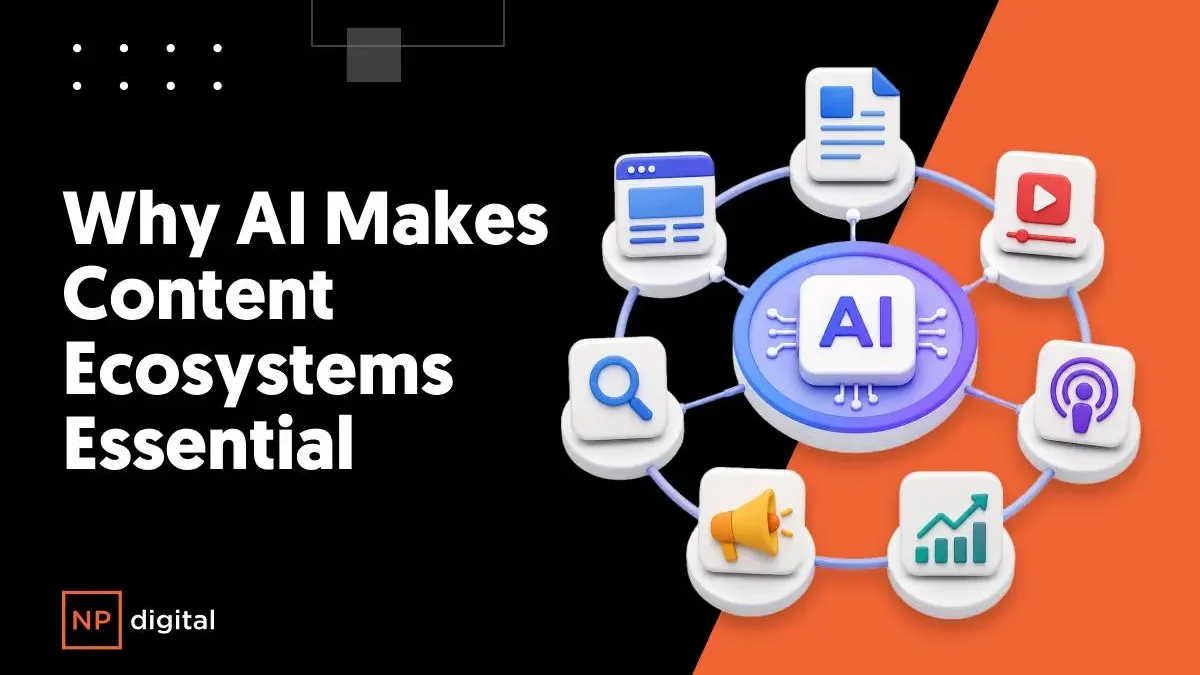
The Strategic Shift: How AI Content Ecosystem Influencer Marketing Replaces One-Off Campaigns

Most influencer programs still run on a familiar rhythm: build a list, send a brief, ship a campaign, report on reach, dismantle the team, and start over next quarter. AI content ecosystem influencer marketing breaks that rhythm entirely. The argument here is not that AI speeds up creator discovery — it is that AI makes the fragmented, list-based campaign obsolete. When matching models can map millions of creators across audience graphs, content semantics, and performance signals in seconds, the strategic unit stops being the campaign and becomes the always-on creator network. Platforms like KOL Find are built around exactly this premise: instant matching of brands to Key Opinion Leaders across TikTok, Instagram, and YouTube by analyzing millions of data points. This deep-dive examines what that shift actually requires operationally.
From Campaign Sprints to Always-On Creator Networks
Campaign-based creator selection has a structural flaw that no amount of spreadsheets fixes: every cycle restarts from zero. Each new brief triggers fresh outreach, fresh negotiation, and fresh audience overlap guessing, and almost none of the learning from the last quarter carries forward in a usable form. You end up rebuilding institutional knowledge instead of compounding it.
An always-on creator network inverts this. Instead of asking "who fits this campaign," you ask "who fits this ecosystem, in which role, with which content pillar." AI supports that question through continuous discovery, fit scoring, and orchestration — the network is refreshed rather than reconstructed. The practical difference shows up in the second and third quarter, when you have creator performance history, audience overlap maps, and content reuse data that make each subsequent match sharper.
Why Fragmented Creator Lists Undermine Brand Consistency
Scattered KOL outreach produces four predictable failure modes. First is message drift: ten creators briefed by five different people generate ten interpretations of your positioning, and the audience sees the inconsistency even if your internal deck looks coherent. Second is duplicate audience reach — brands routinely pay three creators to hit 60% of the same follower pool while assuming they bought triple the coverage. Third is poor content reuse; a high-performing creator asset dies in a campaign folder because no one knows it exists six weeks later. Fourth is weak measurement, since fragmented campaigns can't be compared against each other without a shared taxonomy.
KOL Find addresses this by converting ad-hoc outreach into a matching system with persistent criteria. When audience fit thresholds, brand-safety filters, and creator-format requirements live in one place, consistency stops depending on who happens to run the campaign.
The Hidden Cost of Treating Creators as Interchangeable Inventory
The deepest error in list-based influencer marketing is treating creators as ad slots — interchangeable inventory priced by follower count. Creators are not interchangeable. A creator with 80,000 followers who speaks fluently in native short-form storytelling will outperform a 900,000-follower account posting polished broadcast spots, and the ranking system that says otherwise is optimizing for the wrong variable entirely.
What separates the two is context: format strength, audience trust accrued over years, and the semantic fit between a creator's actual content and your category. AI-assisted matching improves here because it can identify complementary creator roles rather than simply sorting by reach. In practice, this is the single biggest behavioral change we see in teams switching from manual lists to scored matching — they stop buying headcount and start buying fit.
Inside an AI-Powered KOL Finder: How Machine Matching Supports Ecosystem Design
An AI-powered KOL finder is not a search box with follower-count filters. The systems that actually work evaluate four layers simultaneously: audience structure, content semantics, performance history, and risk. Understanding what each layer does — and what it cannot do — is the difference between using matching as a decision aid and outsourcing strategy to a black box.
Audience Graphs, Content Semantics, and Creator Fit Scoring
The audience layer answers structural questions: who follows this creator, how do those followers distribute geographically, what else do they follow, and how much do they overlap with creators you already work with? Overlap detection alone eliminates a large share of wasted spend, because it surfaces the collisions that manual lists never reveal.
The semantic layer is where modern matching diverges from keyword search. Instead of tagging a creator "fitness," a semantic model reads transcripts, captions, and comment threads to understand how the creator engages with the topic — instructional, comedic, aspirational, contrarian. That distinction matters because a content pillar like "accessible recovery science" needs a different creator archetype than "performance optimization," even though both sit under fitness. Fit scoring then blends audience affinity, geography, tone, format, and category adjacency into a composite that reflects whether the creator can carry your specific pillar, not just mention your noun.
Predictive Performance and Fraud Detection in an AI Influencer Matching Platform
Predicted engagement quality matters more than predicted engagement rate. A model trained on historical content performance can estimate whether a creator's audience actually responds to sponsor-adjacent content — many creators have high organic engagement that collapses when paid messaging enters the frame.
Fraud detection is the less glamorous half. Anomaly detection on follower growth curves, comment authenticity analysis, and audience-geography consistency checks collectively catch the inflated accounts that plague every open marketplace. This is where volume helps: KOL Find's analysis of millions of data points gives the model enough signal to flag abnormal patterns that a human reviewer scanning ten profiles would miss entirely.
| Signal layer | What it answers | Typical failure if ignored |
|---|---|---|
| Audience graph | Who actually follows, and who else | Paying twice for the same eyeballs |
| Content semantics | How the creator talks about your category | Off-tone placements |
| Performance history | Whether sponsor content lands | High organic reach, low paid lift |
| Risk and authenticity | Whether audiences are real | Budget lost to inflated accounts |
Human-in-the-Loop Matching with KOL Find
AI recommendations still require human review, and any platform that pretends otherwise should be treated with suspicion. Brand context, creative judgment, and campaign objectives rarely live in a data model — a strategist looking at two equally scored creators will often see that one has a comedic register that will read as mocking rather than warm, or that another recently shifted tone. KOL Find is positioned as decision support for strategists, filtering the candidate space so human attention goes to judgment rather than vetting.
Building a Content Ecosystem KOL Strategy Across TikTok, Instagram, and YouTube
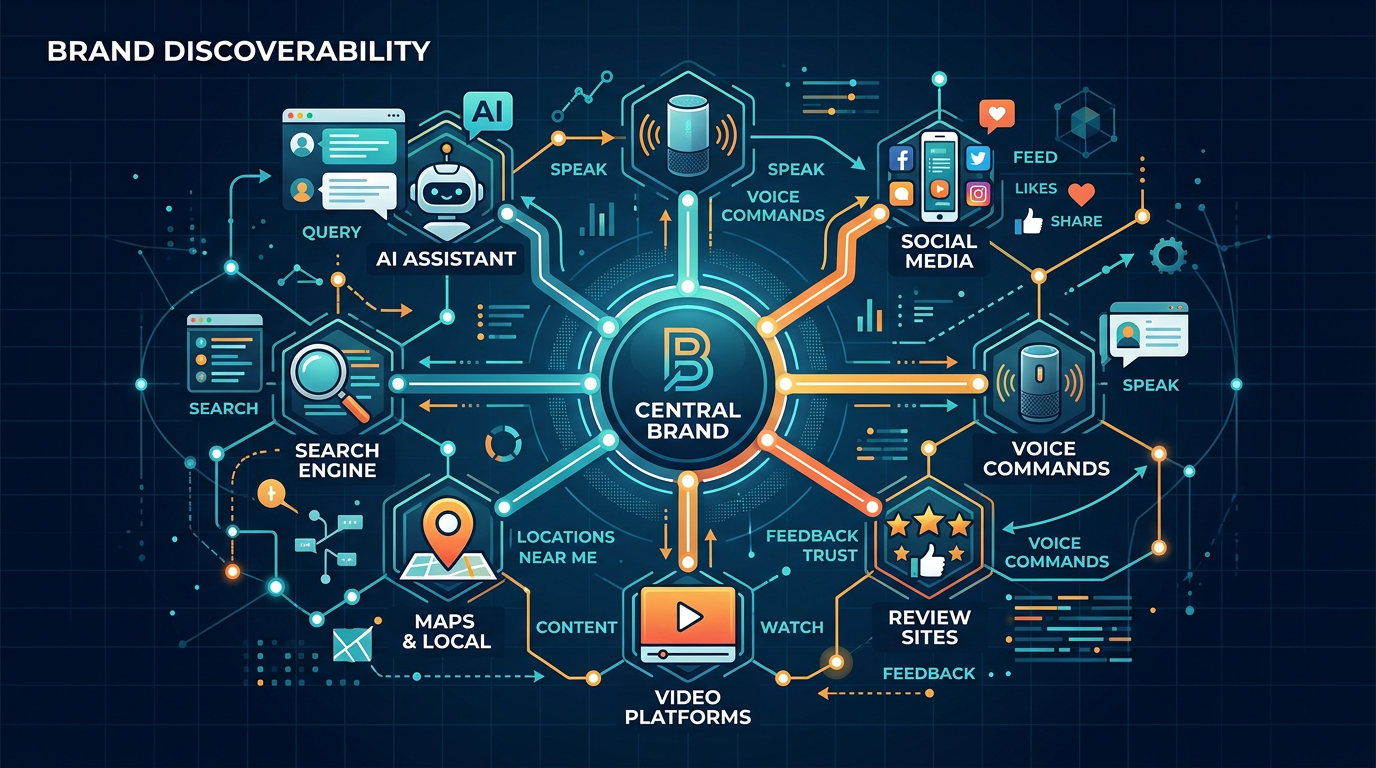
A content ecosystem KOL strategy allocates creators to differentiated roles across platforms so the whole produces more than the sum of placements. This is where matching capability becomes strategy: the same creator set ranks differently depending on role assignment, and role assignment is a human decision made from AI-structured inputs.
Mapping Creator Roles: Anchors, Amplifiers, Niche Experts, and Bridge Creators
Four roles cover most ecosystems. Anchors provide reach plus credibility and give the ecosystem a recognizable face. Amplifiers extend distribution into adjacent audiences without carrying the full brand message load. Niche experts supply authority — the depth that earns trust from skeptical, high-consideration buyers. Bridge creators are the underrated category: they sit between two communities that otherwise never intersect, connecting, say, a professional-skincare audience with a cosmetic-procedure audience.
Bridge creators are difficult to find manually precisely because they don't rank well on any single dimension. Their value is in the adjacency, and semantic plus audience-graph analysis is what surfaces them.
Aligning Content Pillars with Creator Formats and Channel Behaviors
Platform behavior is not interchangeable, and matching that ignores it produces predictable waste. TikTok rewards velocity and native storytelling — creators who can work fast, low-production, and culturally fluent. Instagram supports visual cohesion and community, which makes it the natural home for sustained pillar identity. YouTube enables depth and search longevity, where a single well-constructed video keeps compounding views for years.
An AI influencer matching platform adds value here by scoring format alignment, not just topical relevance. Matching a creator whose strength is 90-second explanatory segments to a YouTube pillar requiring 12-minute depth is a fit failure, even if their category tags align perfectly.
Using an AI Influencer Matching Platform to Orchestrate Always-On Collaboration
The operational win is refresh without rebuild. Once ecosystem roles and pillars are configured, KOL Find can continuously surface candidates for the slots where you need coverage — replacing a churned amplifier, adding a bridge creator for a new region — instead of restarting discovery. Over time, the network accumulates learning rather than resetting.
What AI Content Ecosystem Influencer Marketing Should Measure Beyond Reach
Reach is easy to measure and nearly useless as a primary metric. AI content ecosystem influencer marketing demands measurement that reflects fit, contribution, and incremental impact across the creator network — metrics that are harder to compute but far more predictive of business outcomes.
Fit, Engagement Quality, and Brand Safety Indicators
Audience relevance, comment quality, sentiment, and creator-brand adjacency matter more than follower counts. Comment quality in particular distinguishes creators whose audiences actually discuss the product from those collecting emoji responses. Brand-safety review remains a human step, but AI can pre-filter obvious risks so reviewers spend time on judgment calls.
Incrementality, Content Reuse, and Ecosystem Contribution
Last-click attribution systematically underestimates influencer work. Lift studies, holdouts, and geo-tests are the more honest instruments. Two ecosystem-specific metrics deserve attention: content reuse (how many assets from a creator get repurposed into paid, organic, or lifecycle channels) and overlap reduction (the measurable drop in duplicated audience reach as the ecosystem matures). A creator who contributes one reusable asset and improves network coherence may be worth more than a higher-reach creator contributing nothing downstream.
Benchmarks for AI-Assisted Creator Selection
Benchmarks must be brand- and category-specific, and any vendor presenting universal numbers should be questioned. Reasonable starting points to calibrate internally: match-quality scores against your own historically successful creators, pilot-cell performance relative to a legacy list, creator retention across cycles, and content efficiency measured as usable assets per creator. Track these over at least two cycles before drawing conclusions — single-campaign comparisons are noise.
Real-World Implementation: Lessons from Production and Common Pitfalls
Implementation tends to fail in the same places regardless of category. The teams that succeed treat matching as a phased capability rather than a switch.
Pilot-to-Scale Playbook for AI-Assisted KOL Matching
Define content pillars first, then configure matching criteria against them, then test a deliberately small creator set (eight to twelve is a workable range) with clear per-role expectations. Measure ecosystem contribution — overlap, reuse, lift — rather than raw reach, then scale only the role-creator combinations that demonstrably worked. Scaling before defining pillars is the most common cause of a failed rollout.
Common Missteps: Overindexing on Reach, Ignoring Creator Context, and Underusing Content
The recurring failures are consistent. Selecting by follower count alone. Ignoring platform-native format strengths. Briefing creators so loosely that the resulting content can't be reused. And failing to archive and redeploy high-performing assets — arguably the most expensive mistake, because content reuse is the cheapest ROI lever in the entire ecosystem.
Case Vignettes: When KOL Find-Style Matching Improves Ecosystem Coherence
A direct-to-consumer skincare brand running quarterly list-based campaigns discovered after overlap analysis that three of its five recurring creators reached substantially the same audience; consolidating to one anchor plus two amplifiers freed budget for a bridge creator connecting dermatology-adjacent and beauty audiences. A consumer-electronics brand used format-fit scoring to move a high-reach creator from YouTube long-form to TikTok, where the creator's actual strength lay, and repurposed the resulting short assets into paid social.
Authority and Governance: Best Practices for AI-Assisted Influencer Decisions
Governance is what separates a scalable program from a compliance incident. Platforms publish sponsored-content disclosure requirements — TikTok's branded content policy, Instagram's branded content tools and disclosure guidance, and YouTube's paid promotion disclosures — and matching workflows should treat those as hard filters, not advisory notes.
What Official Platform Documentation and Disclosure Rules Mean for AI Matching
Disclosure obligations vary by platform, format, and jurisdiction, and they change. Encoding them as configurable checks inside the matching workflow prevents the common failure where a creator is selected into a format they cannot legally or practically disclose within.
Human Oversight, Transparency, and Brand Safety Reviews
Maintain documented decision criteria, an escalation path for brand-safety issues, and clear ownership of final approval. If a recommendation cannot be explained to a stakeholder, it should not be actioned.
Ethical AI Use in Creator Discovery and Evaluation
Bias, transparency, data privacy, and fair creator evaluation deserve explicit attention. Smaller creators with limited historical data are systematically disadvantaged by performance-based ranking; responsible platforms should support exploration and avoid opaque scoring that creators cannot understand.
Trust Signals: Pros, Cons, and When Not to Use an AI-Powered KOL Finder
AI matching excels at scale, speed, consistency, overlap detection, and continuous learning. It has real limitations: model blind spots, overreliance on historical data, weak signal on emerging creators, and the risk of optimizing precisely the wrong metric if your configuration is lazy. Manual curation still wins for highly regulated categories, sensitive campaigns, first-time creator relationships, and contexts requiring deep cultural judgment. The honest position is that matching narrows the field and human judgment closes it.
Operational Playbook: A Practical Checklist for AI Content Ecosystem Influencer Marketing
Define ecosystem goals, roles, and pillars. Set objectives before configuring anything. Map creators to anchor, amplifier, niche expert, or bridge roles. Choose content pillars. Write platform-specific expectations for TikTok, Instagram, and YouTube rather than reusing one brief.
Configure matching criteria and guardrails. Set audience fit thresholds and overlap ceilings. Apply brand-safety and disclosure filters. Specify creator-format requirements per platform. Define which decisions require human sign-off inside KOL Find.
Run test-and-learn cycles. Launch a small pilot set. Measure incrementality, overlap reduction, and content reuse. Document creator performance in a shared record. Feed results back into matching criteria — then repeat. The ecosystem compounds only if the learning does.