How YouTube’s Algorithm Can Find Your Customers for Free
how-to-guide
How YouTube’s Algorithm Can Find Your Customers for Free
Find Customers for Free with YouTube's Algorithm: YouTube Influencer Marketing for Customer Acquisition
YouTube is not a billboard. It is a matching engine, and that distinction is the entire reason YouTube influencer marketing for customer acquisition can work without a paid media budget. Instead of buying attention, you borrow trust that already exists between a creator and their audience, then let the recommendation system route that trust toward people who are actively looking for an answer your product provides. This deep dive explains the mechanism, the workflow, and the failure modes — the parts that rarely make it into surface-level influencer guides.
1. How YouTube's Algorithm Turns Viewer Attention into Customer Acquisition
The system never sells anything. It ranks and recommends videos that keep people on the platform and leave them feeling satisfied. Customer acquisition is a downstream side effect of that ranking behavior — and understanding the side effect is what lets you engineer it deliberately.
1.1 What the YouTube Algorithm Actually Optimizes For

YouTube's ranking systems weigh click-through rate, average view duration, and absolute watch time, then layer on satisfaction signals: likes, shares, saves, survey responses, and whether a viewer keeps watching YouTube afterward. In practice, session-level outcomes matter more than any single video metric. A video with 30,000 views and 70% retention often earns more distribution than one with 300,000 views and 15% retention, because the algorithm is predicting value, not counting eyeballs. A common mistake is optimizing thumbnails for curiosity while ignoring what happens in the first 30 seconds — inflated CTR with weak retention is one of the fastest ways to stall a channel's momentum.
1.2 Why Free Customer Acquisition Happens When Content Matches Search and Recommendation Intent
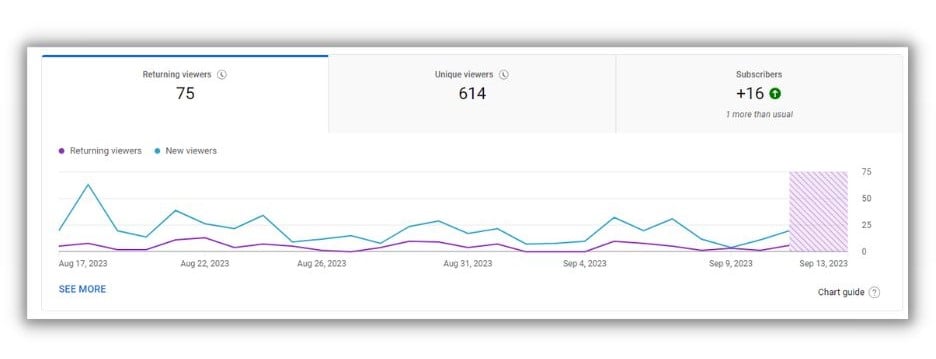
Two discovery paths converge. Search serves explicit demand: someone types "best CRM for freelancers" and gets answers. Recommendations serve latent demand: someone watches a productivity video, and the sidebar offers adjacent content. When a creator's video answers a specific buyer question, it gets pulled into both paths — indexed for search and fed into recommendation clusters for similar viewers. That overlap is where free customer acquisition actually happens: no ad spend, but a video that keeps appearing in front of people who are already problem-aware.
1.3 Mapping Algorithm Signals to Buyer Journey Stages
Different formats trigger different signal types and attract different intent levels. Treat this mapping as your campaign blueprint.
| Buyer stage | Content format | Primary algorithm signal | Buyer intent |
|---|---|---|---|
| Awareness | Shorts, entertainment, "day in the life" | Views, swipe-through, new-viewer retention | Low — problem not yet named |
| Consideration | Tutorials, deep reviews, problem explainers | Watch time, session duration, comments | Medium — evaluating approaches |
| Decision | Comparisons, "X vs Y", setup walkthroughs | Search CTR, satisfaction, link clicks | High — comparing vendors |
Mapping formats to stages prevents the classic error of running a decision-stage offer inside an awareness-stage video, which converts poorly and confuses the algorithm about who should see it.
1.4 KOL Find's Role in Connecting Algorithmic Reach to Audience Fit
Reach without audience fit produces views and nothing else. KOL Find is an AI-powered platform that matches brands with ideal KOLs across YouTube, TikTok, and Instagram, analyzing millions of data points — topic clusters, audience demographics, engagement quality, and historical performance — to identify creators whose viewers already resemble your buyers. That matters because manual research caps out fast: a human can realistically evaluate a few dozen channels, while a matching layer can rank thousands against your actual customer profile.
2. Finding YouTube Influencers Who Already Reach Your Customers
Creator selection is where most campaigns are won or lost. Subscriber count is the least useful filter available, and every team that learns this lesson learns it the expensive way.
2.1 Define Customer Intent and Niche Before You Search
Start with your own data. Pull the search phrases, support tickets, and sales-call objections that precede a purchase, then translate them into YouTube query language. "How do I automate invoice reminders" is a creator brief. "Accounting software" is not. If you cannot state the three questions your buyers ask before purchasing, no amount of creator research will compensate.
2.2 How to Find YouTube Influencers Through Search, Suggested Videos, and Channel Networks
Use keyword search to find ranking videos, then trace each one back to its channel. Open the suggested-video chain beside a high-intent video and note which creators recur — that pattern reveals the topical cluster YouTube itself associates with your niche. Competitor "mentioned in" videos, community tabs, pinned comments, and collab credits in descriptions expose networks of creators who already cross-pollinate audiences. This is essentially free audience graph mapping.
2.3 Vet Audience Overlap, Engagement Quality, and Comment Sentiment
Views lie; comments rarely do. Read the top 50 comments on three recent videos and classify them: questions about the product category (good), requests for tutorials (good), generic praise (neutral), and spam or engagement-pod patterns (disqualifying). Check audience geography against your serviceable market, and look at commenter channels — if the audience looks like bots or unrelated hobbyists, the creator's reach will not transfer.
2.4 YouTube Influencer Matching: Align Creator Topics with Product Use Cases
Topical relevance beats reach every time. A creator with 40,000 subscribers whose entire catalog covers freelance finance will outperform a generalist with 500,000 subscribers on conversion rate, because their audience shares your buyer's problem. Build a simple matrix: creator topic pillars on one axis, your product use cases on the other. Any creator who cannot map to at least two use cases is a poor fit regardless of their numbers.
2.5 Using KOL Find to Accelerate YouTube KOL Search Across Platforms
Manual research typically takes 10–15 hours per shortlist. KOL Find compresses that by instantly matching brands with ideal KOLs on YouTube and other major platforms, which is especially useful when you want to test the same message across YouTube long-form, Shorts, and TikTok simultaneously. The practical benefit is iteration speed: more shortlists tested per month means faster discovery of creator-audience pairs that actually convert.
3. Decoding the Recommendation Loop for Influencer Campaigns
A single video is a lottery ticket. A recommendation loop is an annuity.
3.1 How YouTube Decides Which Videos to Recommend After Upload
On upload, YouTube shows the video to a small slice of subscribers and recent viewers, then measures CTR and retention. If those hold, impressions expand to broader audiences. The first hour and first 24 hours matter, but they are not decisive — evergreen videos commonly spike months later when search or recommendation context shifts. Treat early performance as a signal to iterate, not a verdict.
3.2 The Compound Effect of Collabs, Mentions, End Screens, and Playlists
Every collab injects a new audience cluster into the algorithm's understanding of who might like your content. Pinned comments, end screens, and playlists keep viewers inside a session, which is exactly the behavior the recommendation system rewards. A playlist that bundles a creator's review, tutorial, and comparison into one sequence can generate compounding session time across all three videos.
3.3 Using Shorts and Long-Form Together to Widen Free Reach
Shorts generate discovery volume with low production cost; long-form builds the trust that precedes purchase. The practical sequence is Shorts to find new viewers, then long-form or linked videos to convert them. Creators who cross-link between the two formats frequently see higher subscriber conversion per view than those who publish only one format.
3.4 Signals That Indicate a Creator's Audience Is Likely to Convert
Watch for four signals: branded search lift after a video goes live, comment questions that reference your product by name, meaningful outbound link clicks (measure with per-creator UTMs), and overlap between a creator's audience and your existing customer base. Two or more of these together is a strong predictor; a large view count alone is not.
3.5 Authority Checkpoints: What YouTube's Official Creator Guidance Emphasizes
YouTube's own creator education materials consistently return to retention, satisfaction, and audience-first content — the platform explicitly warns against misleading metadata, clickbait that breaks viewer trust, and engagement manipulation. Aligning your campaign with those principles is not just compliance; it is the same signal set the ranking systems are designed to reward.
4. Step-by-Step Workflow to Find Customers for Free with YouTube's Algorithm
Here is the operational sequence, in the order it should be executed.
4.1 Step 1: Build a Customer-Intent Keyword Map for YouTube
Group queries into four buckets: problem ("why is my X slow"), solution ("how to automate X"), comparison ("A vs B"), and brand-adjacent ("X alternative"). Problem and solution queries feed awareness and consideration content; comparison and brand-adjacent queries feed decision content.
4.2 Step 2: Identify Creators and Videos Ranking for Those Keywords
Run each query in incognito, log the top 10 results, and record channel, upload date, view velocity, and whether the video is still ranking. Older videos holding rank indicate durable topical authority — those creators are usually reliable partners.
4.3 Step 3: Vet Creators with Data, Not Vanity Metrics
Score each candidate on a few weighted fields. A simple spreadsheet formula or SQL aggregation gets you further than most dashboards:
SELECT channel,
       AVG(views)                                   AS avg_views,
       AVG(views) / NULLIF(subscribers, 0)          AS view_ratio,
       AVG(retention_pct)                           AS avg_retention,
       AVG(engagement_rate)                         AS avg_engagement
FROM creator_videos
WHERE published_at > CURRENT_DATE - INTERVAL '180 days'
GROUP BY channel
HAVING AVG(views) > 2000
ORDER BY view_ratio DESC;
The
view_ratio4.4 Step 4: Design Collaborative Content That Feeds the Algorithm
Formats that work: tutorials that solve a real problem using your product, honest reviews with limitations acknowledged, comparisons against alternatives, integration walkthroughs, and "day in the life" segments showing genuine use. Give creators latitude on structure — audiences detect scripts, and scripted enthusiasm damages retention.
4.5 Step 5: Measure Assisted Conversions and Organic Lift
Track branded search volume (Google Search Console and YouTube search trends), direct traffic, per-creator UTM clicks, and creator-specific landing pages. Assisted conversions matter most: a viewer may watch three videos before ever clicking, so last-click attribution will understate YouTube's contribution.
4.6 Step 6: Double Down on Winning Creator-Audience Pairs
Once a creator-audience combination produces qualified traffic at acceptable cost, repeat it — with new formats, not the same video. Scaling an authentic partnership means giving the creator more creative range, not more brand copy.
5. Real-World Implementation: Case Patterns and Lessons from YouTube KOL Campaigns
These patterns recur across campaigns I have reviewed.
5.1 SaaS Example: Comparison Videos Capture High-Intent Buyers
A mid-market analytics vendor worked with a creator who produced a 14-minute "A vs B vs C" comparison. It ranked for decision-stage queries within weeks and drove trials at a fraction of paid search cost, largely because viewers arrived pre-educated and had already eliminated two alternatives.
5.2 E-commerce Example: Shorts Trigger Recommendation Loops
A kitchen-gadget brand ran sponsored Shorts with creators demonstrating a single use case in under 40 seconds. Branded search rose measurably within two weeks, and the same Shorts resurfaced in recommendation feeds for months — compounding reach with zero additional spend.
5.3 Local Service Example: Creator Testimonials Build Trust
A regional moving company partnered with a local vlogger who documented an actual move. The video generated qualified enquiries for over a year, because it answered the exact anxieties homeowners search for before booking.
5.4 Common Pitfalls: Chasing Subscriber Count Over Audience Fit
The most expensive mistake is mega-influencer bias. Large, diffuse audiences often convert worse than focused ones, and inflated engagement from purchased followers can make a channel look attractive in a spreadsheet while producing nothing in practice.
5.5 Lessons from Production: Why Micro-Creators Often Outperform Mega-Influencers
Micro-creators typically have closer audience relationships, more specific topical authority, and higher trust — which translates into stronger click-through and lower acquisition cost. In most campaigns I have seen, the best-performing partners were channels with 10,000–80,000 subscribers and a sharply defined niche.
6. Advanced YouTube KOL Search and Matching Tactics
Once basic workflows are running, these tactics improve precision.
6.1 Reverse-Engineer Competitor Influencer Campaigns
Search competitor names and note which creators reference them in the last 12 months. Those creators already understand the category and their audiences have been primed — you are extending an existing conversation rather than starting one.
6.2 Use Lookalike Audiences from Existing Customers to Shortlist Creators
Pull your best customers' shared attributes — job titles, interests, subscribed channels if available — and define the content profile that matches them: topics, tone, demographics, production style. Then filter creators against that profile instead of against keyword counts.
6.3 Semantic Matching: Topics, Language, and Audience Psychographics
Go beyond keywords. Read how a creator's audience talks in comments: what vocabulary they use, what they distrust, what they aspire to. A creator whose community language mirrors your customers' will feel native; one who does not will feel like an ad read.
6.4 Combine Organic YouTube Influencer Matching with Paid Amplification
Only amplify after organic traction is proven. A video with strong organic retention can be scaled with paid promotion or by repurposing it as an ad asset — but promoting a video that already fails to hold viewers simply buys you expensive failure.
6.5 KOL Find as an AI Matching Layer for YouTube, Instagram, and TikTok
KOL Find functions as an AI matching layer that analyzes millions of data points to identify ideal influencer partners, which is particularly valuable when your shortlist needs to span platforms. Rather than running separate manual searches for YouTube, Instagram, and TikTok, teams can operate from one ranked set of creators whose audiences overlap their buyers.
7. Trust, Risks, and When Not to Rely on the Algorithm Alone
Honest framing: algorithmic acquisition is powerful and imperfect.
7.1 Pros and Cons of Free Algorithmic Customer Acquisition
Low direct cost and durable asset creation sit on one side; long ramp times, unpredictability, and platform dependency sit on the other. A single ranking change can reduce reach overnight, and no creator relationship is fully within your control.
7.2 When to Use YouTube Influencer Marketing for Customer Acquisition vs. Paid Ads
| Dimension | Organic creator content | Paid ads |
|---|---|---|
| Speed | Weeks to months | Hours to days |
| Control | Low to medium | High |
| Trust transfer | High | Low |
| Scalability | Moderate, relationship-bound | High, budget-bound |
| Cost curve | Front-loaded time, then compounding | Linear with spend |
Use organic creator content when trust and durability matter; use paid when you need volume now or precise targeting.
7.3 Performance Benchmarks to Watch: Views, Engagement, Click-Through, Conversion
Judge each metric against the campaign goal. Views validate reach; retention validates content quality; engagement validates resonance; click-through validates intent; conversion validates fit. Optimizing one in isolation almost always damages another.
7.4 Compliance and Disclosure Requirements for Influencer Campaigns
Sponsored content must be clearly disclosed — platforms provide paid-promotion toggles, and regulators require clear, conspicuous disclosure in the content itself. Disclosure does not reduce effectiveness; audiences punish concealment far more than they punish honesty.
7.5 Avoiding Attribution Traps and Overestimating "Free" Reach
Free reach is not free. Creator fees, product seeding, briefing time, review cycles, and measurement tooling all carry cost. Over-attributing conversions to creator content, or ignoring assisted effects, both lead to bad budget decisions — triangulate with branded search and self-reported attribution.
8. Measuring and Scaling YouTube Influencer Marketing for Customer Acquisition
8.1 KPIs That Matter: Qualified Traffic, Branded Search, Assisted Conversions
Move past views. Track qualified sessions from creator landing pages, branded search volume growth, and assisted conversions across the full path — these are the metrics that connect YouTube influencer marketing for customer acquisition to revenue.
8.2 UTM Tracking, Unique Links, and Creator-Specific Landing Pages
Give every creator a unique UTM set and, where feasible, a dedicated landing page or route. Consistency matters more than cleverness:
https://example.com/lp?utm_source=youtube&utm_medium=influencer&utm_campaign=q3_review&utm_content=creator_handle
Standardize the naming convention in a shared doc before launch, or your reporting will fracture within a month.
8.3 Incrementality: Proving Lift Beyond Last-Click
Run simple holdout tests: compare branded search and direct traffic in periods with and without creator publishing. Where budget allows, use platform-level lift studies to validate that exposure produced behavior change rather than harvesting demand that already existed.
8.4 Scaling Winning Creator-Audience Pairs Systematically
Codify what worked: the topic pillar, the format, the audience segment, and the creator profile. Then source additional creators who match that profile, using a platform like KOL Find to rank candidates against your proven pattern instead of starting from scratch each quarter.
Conclusion
YouTube's algorithm rewards content that keeps viewers satisfied, and satisfied viewers are the ones most likely to become customers. That alignment is why find customers for free with YouTube's algorithm is realistic when you treat creator partnerships as a research and matching discipline rather than a media buy — map intent, vet audience fit, design content that earns retention, measure beyond last click, and repeat only what proves out. The compounding happens when those partnerships endure; the platform simply does the routing.