Why YouTube Views Are Higher: The Impact on Your EMV and ROI
analysis
Why YouTube Views Are Higher: The Impact on Your EMV and ROI

Measuring YouTube Views Earned Media Value: The Deep-Dive Guide for KOL Campaigns
If you run influencer campaigns, you've probably stared at a view count and asked yourself the same question: What is this actually worth? On YouTube, that question is more complicated—and more interesting—than it looks. YouTube views earned media value (EMV) has become the bridge between raw video metrics and the language of media buying. It lets brands translate organic creator exposure into the paid-media equivalent cost, giving marketers a credible number they can take into campaign reviews, budget meetings, and boardroom presentations.
But EMV is easy to get wrong. Inflate it with the wrong benchmarks, treat every platform view as equal, or ignore view quality, and you'll end up with a metric that looks great on paper but collapses under scrutiny. This deep dive covers how to define, calculate, and defend YouTube views earned media value in your influencer marketing measurement practice—without fooling yourself or your stakeholders.
1. Building the Metric Foundation: YouTube Views, EMV, and ROI
What Earned Media Value Really Measures for YouTube KOL Content
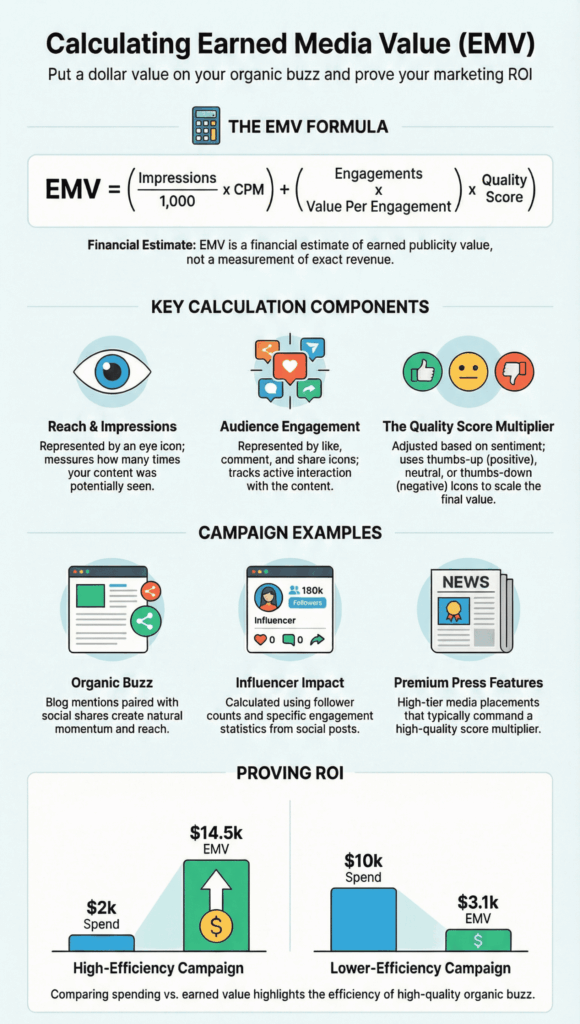
Earned media value is an estimation, not a revenue figure. It answers one specific question: If we hadn't earned this exposure through a creator, how much would it have cost to reach the same audience through paid media?
For YouTube KOL content, each view functions as an earned impression. You multiply impressions by a relevant cost-per-mille (CPM) benchmark to arrive at an EMV number. So a video with 500,000 views and a benchmark CPM of $40 would generate $20,000 in earned media value.
In practice, the challenge is choosing the right benchmark. Many brands default to display-ad CPMs of $5–$10, which dramatically understates the value of YouTube video exposure. Others inflate numbers by using top-tier television CPMs that have no relation to their actual campaign context. The benchmark should reflect what it would truly cost to produce and place comparable video inventory adjacent to YouTube KOL content—typically sponsorship CPMs, which range from $20 to $60 depending on niche, audience quality, and format.
It's equally important to remember what EMV doesn't measure. A video can generate $50,000 in earned media value and still produce zero direct sales. EMV measures exposure value, not business return. Treating them as synonyms is the fastest way to break trust with the CFO.
Defining YouTube Influencer ROI in an Influencer Campaign

Return on investment (ROI) and EMV are complementary but distinct. ROI compares the return generated by a campaign against the money invested. EMV focuses purely on the value of the exposure earned, regardless of whether that exposure converted.
Consider a simple example: you spend $30,000 on a YouTube KOL integration that generates $90,000 in attributed sales. Your ROI is 200% (($90,000 − $30,000) ÷ $30,000). Meanwhile, if that video earned 800,000 views and you value them at a $45 CPM, your EMV is $36,000. Both numbers are true, but they tell entirely different stories—one about financial return, the other about media value.
There's a strategic insight buried here: better creator selection can improve YouTube influencer ROI before a single scene is filmed. If your KOL matching relies on follower counts or generic audience sizes, you're starting at a disadvantage. AI-powered platforms like KOL Find evaluate creators on real performance data and audience relevance, which reduces the risk of spending budget on creators whose viewers were never going to buy from you.
Why Platform View Counts Are Not Comparable
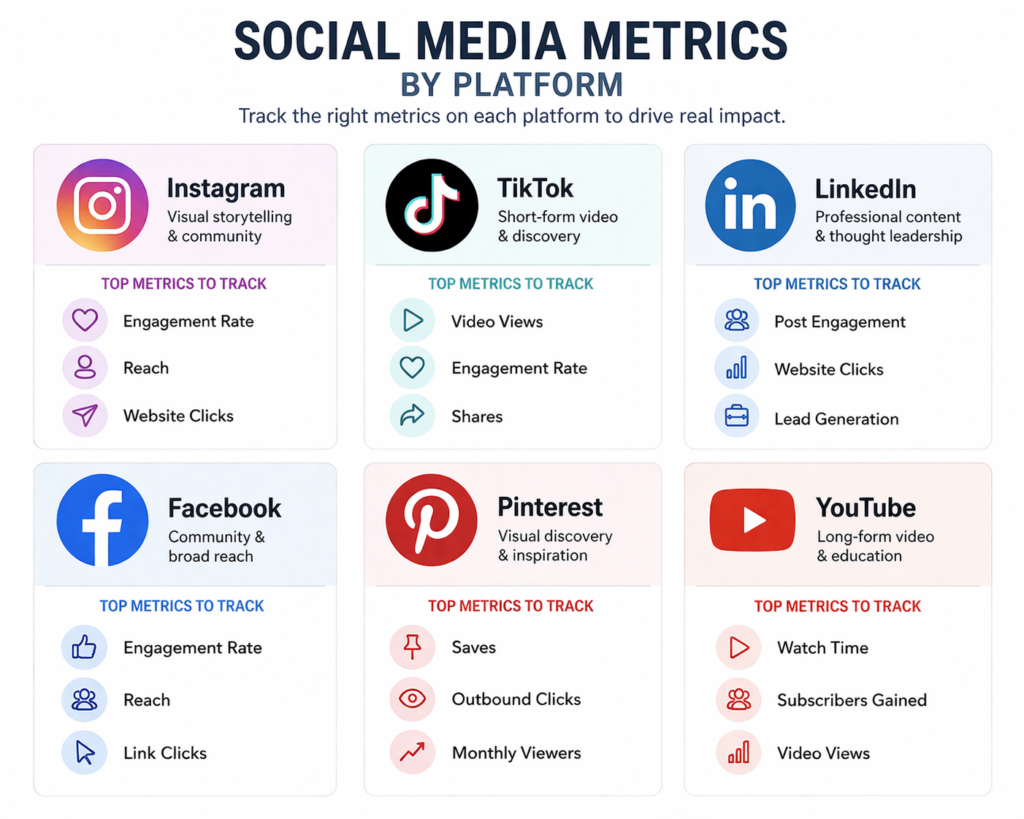
Here's the hidden insight that trips up many influencer marketing measurement frameworks: a YouTube view is not the same event as a TikTok, Instagram, or Facebook view.
YouTube's counting mechanism is significantly stricter. A view on a long-form YouTube video is recorded after a viewer actively clicks play and watches for roughly 30 seconds—or completes the video if it's shorter. That means YouTube views represent intentional, sustained attention. On TikTok, a view is counted the moment a video starts playing, even if the user scrolls past in milliseconds. Facebook and Instagram count a video view after just three seconds, and those three-second views can include autoplay sessions where the user never even noticed the content.
This discrepancy is central to credible influencer marketing measurement. If you're aggregating views across platforms as if they were equal units, you're comparing hours of engagement with fractions of a second. Any EMV model that doesn't account for this is producing garbage in, garbage out numbers. When you calculate YouTube views earned media value, you're working with a fundamentally higher-quality exposure unit—which is exactly why it deserves proportionally higher valuation.
2. Why YouTube Views Earned Media Value Is Higher Than Other Platforms
Search Intent: The Most Undervalued Part of a YouTube View

Unlike feed-based social platforms where content ambushes the user, a large portion of YouTube traffic begins with intent. Viewers search for specific topics, click on subscriptions from creators they follow, or actively choose a video from their recommendations. They've made a conscious decision to watch.
A search-driven YouTube view carries intent that a passive Instagram Story view simply doesn't. When someone searches "best sunscreen for acne-prone skin" and clicks on a KOL's review video, they're in a research mindset. They haven't just encountered an ad; they've sought out content that happens to feature your brand. This is why YouTube views earned media value in awareness and consideration campaigns tends to outperform equivalent volume on other platforms—each view represents a more engaged, more qualified human being.
Watch Time and Retention: How the Algorithm Turns Views Into More Views
YouTube's recommendation engine is built around watch time and audience retention, not click-through rate or share counts. Videos that hold viewers for longer durations get pushed to more browse features, suggested sidebar slots, and search results—all without any additional media spend.
This creates a structural advantage for YouTube KOL campaigns. A creator who produces an engaging, well-structured integration doesn't just earn the initial views from their subscriber base; the algorithm rewards that content with sustained organic distribution. This cascading discoverability means that strong YouTube KOL content effectively compounds its impressions over time, which raises its total earned media value far beyond what a single distribution moment would suggest.
Evergreen Reach: A YouTube Video Keeps Earning Long After Publishing
A sponsored Instagram Reel is culturally irrelevant within days. A YouTube video, by comparison, functions as a permanent asset. Videos remain discoverable through search and suggested content for months or even years after publication.
In practice, this long-tail effect is routinely missing from influencer marketing measurement models. Brands look at a video's first-week performance, declare victory or defeat, and never revisit the numbers. But a well-optimized review video can keep accumulating views every month as new consumers search for product advice. When we work with brands at KOL Find to forecast campaign outcomes, we consistently see this pattern: high-quality YouTube content delivers 40–60% of its total views in the weeks and months after the initial posting window.
YouTube KOL Content Creates Stronger Brand Trust Transfer
Longer-form YouTube content gives creators room to integrate messaging naturally. A 10‑minute review can demonstrate a product in action, compare it with alternatives, explain trade-offs, and speak to concerns—none of which is possible in a 30-second Reel. This depth produces a stronger trust transfer from creator to brand. When a KOL takes the time to contextualize a product honestly, audiences perceive the recommendation as more credible, which improves both the affective value of the exposure and downstream YouTube influencer ROI.
3. How to Calculate YouTube Views Earned Media Value Without Inflating ROI
Building a Basic EMV Formula for YouTube KOL Campaigns
The foundational formula is straightforward:
EMV = (Total YouTube Views ÷ 1,000) × Relevant CPM Benchmark
For example, a 300,000-view Long-form video valued at a $40 CPM generates $12,000 in earned media value. The problem is that the formula is only as trustworthy as its inputs. The CPM benchmark should reflect YouTube KOL sponsorship rates in your industry—not generic display banners or impression-based social ads. Lifestyle and beauty videos typically command higher CPMs than unboxing content in saturated tech niches, and audience demographics matter just as much as raw reach.
A defensible approach is to triangulate three data points: your historical sponsored content CPMs, YouTube's average revenue-share CPMs for comparable creators, and the rates you'd reasonably pay for pre-roll or bumper ads targeted at the same audience.
Adding Engagement Multipliers for a More Accurate EMV Number
Raw view counts can overstate impact when a video has high reach but low interaction. To prevent EMV inflation, apply an engagement multiplier based on likes, comments, shares, and saves relative to view count.
A practical model looks like this:
Adjusted EMV = [(Views ÷ 1,000) × CPM] × (1 + Engagement Factor)

Engagement Factor = (Campaign Engagement Rate − Niche Benchmark Rate) × 2
This is intentionally conservative. If your KOL achieves a 6% engagement rate in a niche where 3% is typical, the engagement factor is (0.06 − 0.03) × 2 = 0.06, increasing EMV by 6%. If engagement falls below benchmark, the multiplier reduces the value. This approach keeps credibility intact while acknowledging that highly engaged audiences are worth more than passive ones.
Normalizing Cross-Platform Data for Honest Comparison
If you're building a cross-platform EMV dashboard, you need consistent definitions before you compare anything. We recommend adopting platform-specific view thresholds that approximate meaningful attention:
| Platform | Counting Mechanism | Suggested Minimum Watch Time |
|---|---|---|
| YouTube (long-form) | 30-second view threshold | 30 seconds (native) |
| TikTok | Counts at playback start | 6+ seconds |
| Instagram/Facebook | Counts at 3 seconds | 3+ seconds (native) |
| YouTube Shorts | Counts at playback start | 2+ seconds |
Only include views that meet these thresholds in your EMV denominator. Additionally, apply platform-specific price factors—don't use a YouTube sponsorship CPM to value TikTok views, and vice versa.
Influencer Marketing Measurement: Choosing the Metrics That Matter
EMV is one lens, but it shouldn't be the only one. A credible measurement stack pairs earned media value with average view duration, click-through rate, UTM-assisted conversions, and audience overlap analysis. AI-driven tools such as KOL Find benchmark creators across these dimensions so you don't have to rely on hunches when selecting your next YouTube partner.
4. The Real Impact on YouTube Influencer ROI and Campaign Performance
From EMV to Business Impact: Aligning Exposure with Conversion Data
EMV is a strong positive signal, but actual ROI depends on whether views convert. YouTube views can be connected to business outcomes using promo codes, affiliate links, UTM parameters, and pixel tracking. Setup is critical: if your creator's CTA is not linkable and trackable, you'll never know whether the campaign paid for itself.
A common mistake is treating a spike in homepage traffic as evidence of conversion success. Real attribution requires granular tracking. Create unique UTM links per creator, implement a dedicated landing page, and use YouTube's native analytics to see how many views came through the KOL's content versus your own channel.
EMV YouTube KOL Campaigns: A Real-World Worked Example
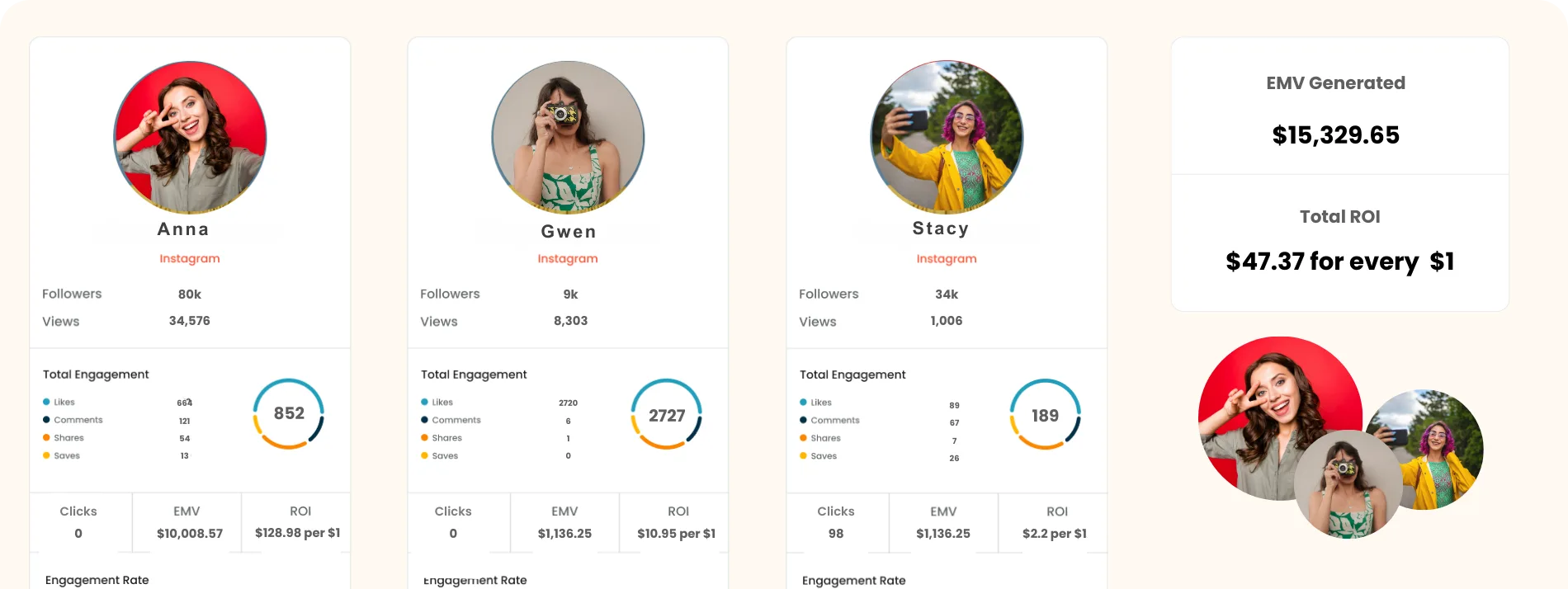
Let's ground this in a realistic scenario. A sustainable skincare brand works with three YouTube KOLs for a spring campaign. Total creator fees plus product costs come to $40,000. The combined content generates 1.2 million views, 48,000 total engagements, and—thanks to carefully deployed promo codes and UTMs—$80,000 in attributable sales.
EMV calculation: (1,200,000 ÷ 1,000) × $50 = $60,000
ROAS: $80,000 ÷ $40,000 = 2.0x
ROI: ($80,000 − $40,000) ÷ $40,000 = 100%
The EMV of $60,000 tells the brand that the exposure alone was worth 1.5 times what they paid for it. The ROI tells them the campaign doubled its investment in direct sales. These stories complement each other. Without EMV, the brand undervalues the awareness component. Without ROI, they have no idea whether the exposure actually moved products.
Now drill into the breakdown. The biggest creator delivered 700,000 views but only $15,000 in sales. A smaller niche creator delivered 200,000 views and $45,000 in sales. The first creator produced enormous earned media value; the second produced the actual return. This is why you need both metrics on your dashboard.
Why Higher Raw Views Can Still Produce Low ROI
The failure mode is predictable: a mismatched creator generates millions of views from the wrong audience, and the brand celebrates reach while the revenue dashboard stays flat. High raw views never guarantee ROI when audience relevance is poor. A tech reviewer's 800,000 views mean little for a period-care brand if their audience skews 70% male.
This is precisely why creator selection quality matters more than raw reach. At KOL Find, the matching process evaluates audience demographics, engagement authenticity, and historical performance patterns—not just follower counts. Data-informed creator selection is the single highest-leverage intervention you can make to protect YouTube influencer ROI, because it prevents wasted spend before production even begins.
5. Common Pitfalls That Distort YouTube Views Earned Media Value
Comparing YouTube Views to TikTok and Instagram Views as Equals
The most widespread error in influencer marketing measurement is summing raw views across platforms and applying a single CPM. Given that a YouTube long-form view requires 30 seconds of attention while a TikTok view can be a half-second blip, treating them as equivalents inflates your EMV for short-form platforms and deflates it for YouTube.
Mistaking Viral Reach for Audience Relevance
EMV should reflect not just volume but whether the audience matches your buyer persona. A video that reaches three million general viewers but only 2% of them fall in your target demographic generates less real value than a video reaching 300,000 viewers with 60% in-market overlap. For brands, audience relevance should be a multiplier on the EMV formula, not an afterthought.
Ignoring Invalid Traffic and Low-Quality View Sources
Bots, click farms, and accidental autoplay sessions inflate YouTube view counts across the platform. Google's invalid traffic filters catch much of this, but no system is perfect. If your KOL's views spike suspiciously from a single region or demographic, scrutinize them. Blended into your EMV calculation, invalid traffic can materially distort your reporting and lead to poor next-campaign decisions.
Overlooking the YouTube Long Tail in ROI Reporting
Brands that evaluate a YouTube KOL campaign only in its first two weeks routinely undervalue the asset. In our experience, search-driven and suggested-view traffic continues building for months. A stronger reporting rhythm measures EMV and YouTube influencer ROI at 30, 60, and 90 days after launch—this captures the long-tail value that distinguishes YouTube from ephemeral social platforms.
6. Industry Best Practices for Influencer Marketing Measurement on YouTube
What Experts Recommend for YouTube KOL EMV Measurement
The industry is shifting from simplistic view-count multiplication toward outcome-based measurement. Major advertising bodies now encourage attention-adjusted metrics that account for view duration, completion rate, and even eye-tracking proxies. Media-equivalent value models are being combined with AI-enhanced validation to filter bots, verify view quality, and benchmark against niche-specific performance data.
Marketers should create a consistent EMV methodology and apply it across every YouTube KOL campaign. Consistency matters more than perfection—if your formula never changes, you can compare campaigns over time and draw real conclusions about creator performance. Changing benchmarks midway through a fiscal year destroys that comparability.
When YouTube Views Should Be a Primary KPI and When They Shouldn't
YouTube views are a legitimate primary KPI for awareness, discovery, and brand-lift campaigns. If your objective is to get a product in front of a large relevant audience and earn credibility through trusted creator voices, view counts and derived EMV are the right yardsticks.
However, views become a misleading primary KPI when the campaign objective is direct sales. Unless you have attribution fully configured with promo codes and UTMs, a view is just a promise, not a transaction. In those campaigns, view counts should be a secondary metric and conversion data the primary one. This balanced perspective prevents teams from celebrating reach while missing a revenue miss.
Benchmarking with First-Party and AI-Powered Data
Benchmarks should come from your own history. If you've run five YouTube KOL campaigns, your average EMV per dollar spent is a more relevant benchmark than any industry report. Layer on niche-specific norms and machine-learning insights from influencer platforms to contextualize what "good" means for your industry, audience lifecycle stage, and campaign objective. AI analysis of millions of data points can flag patterns—like a creator whose engagement outpaces their follower growth—that manual reviews miss.
7. Building a Data-Driven YouTube KOL Strategy with KOL Find
How KOL Find Matches Brands with YouTube Creators Who Deliver Real EMV
The gap between a YouTube view and actual brand value is bridged by one thing: the right creator. KOL Find uses AI-powered matching to connect brands with Key Opinion Leaders on TikTok, Instagram, and YouTube who demonstrably reach relevant, engaged audiences. Rather than relying on subscriber counts, the platform's matching intelligence evaluates creators by real performance data—engagement authenticity, audience demographics, content affinity, and historical delivery.
This matters directly for your EMV math. A well-matched creator produces higher engagement rates, stronger retention, and better conversion outcomes, which means every view carries more weight. When the creator-audience fit is right, both your EMV calculation and your YouTube influencer ROI improve without you having to spend an additional dollar on media.
Using Millions of Data Points to Forecast YouTube Views and ROI
Forecasting YouTube performance before contract signing is perhaps the most useful capability an influencer marketing team can have. KOL Find analyzes vast datasets to estimate which creators will generate meaningful engagement, earned media value, and return on investment. This shifts the conversation from "how many views did they get last time?" to "how will their audience respond to your brand based on behavioral patterns across similar campaigns?"
The practical benefit is avoiding vanity metrics. Follower count tells you about a creator's past success at audience building. Performance data tells you how that creator converts attention into action—a far better predictor of future EMV.
Preparing Your Measurement Plan Before You Brief YouTube Creators
Before you send a single brief, define your measurement architecture. A practical mini-checklist includes the following steps.
First, set EMV calculation parameters: choose your CPM benchmark and document why it's justified. Second, align conversion tracking: agree on promo codes, affiliate links, and UTM schemes with your KOLs before filming. Third, define view thresholds for inclusion, especially if you plan cross-platform comparisons. Fourth, choose engagement multipliers that adjust EMV for over- or under-performing content. Finally, agree on creator CTAs so your brand integration matches the tracking you've built.
Do these things before content goes live, and you'll finally have a YouTube views earned media value framework that survives contact with the real world. The goal isn't to produce a perfect number—no metric can claim that. It's to build a measurement approach honest enough to tell you which creators truly move your brand forward, which ones just generate noise, and where your next campaign dollar belongs.